
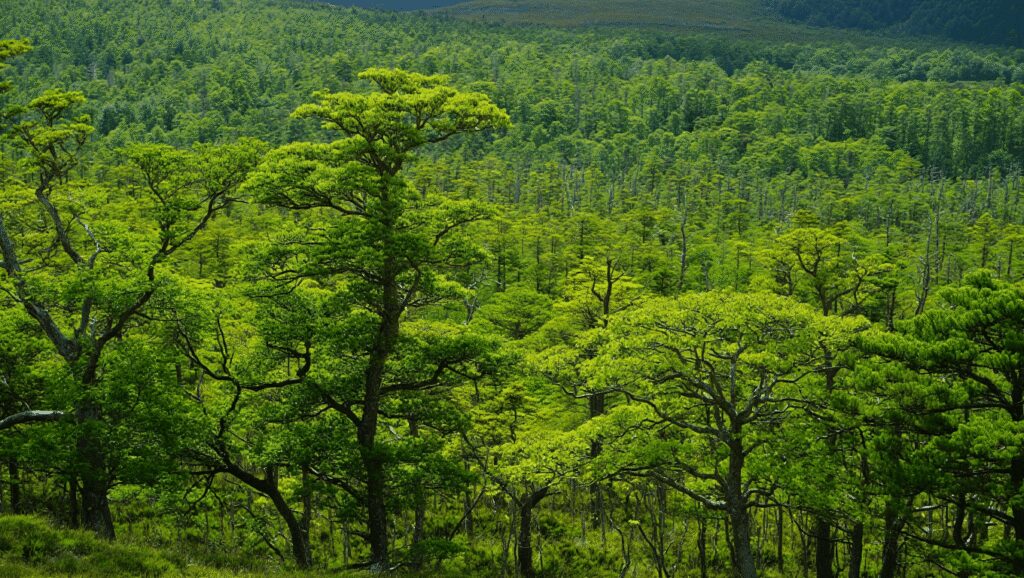
In just three years, a conservation initiative in the Isle of Man exceeded its original objective: what was to be the recovery of 70 acres of temperate forest now covers 100 acres in the Creg and Cowin area. The project, led by the Manx Wildlife Trust, not only progressed ahead of schedule but also reinforces the protection of a rare ecosystem of high ecological value.
Local volunteers planted around 30,000 trees and they completed the work quickly, consolidating a strip of regeneration that will expand the island’s biological diversity and ability to adapt to climate change.
Impact and key data
- Location: Craig y Cowin, Isle of Man.
- Trees planted: ~30,000 in three years.
- Current extension: 100 acres of regenerating forest (initial goal: 70 acres).
- Program: included in the UK’s Temperate Rainforest Restoration Programme.
- Financing: mix of public and private funds up to £38.9 million (approx. $52 M).
- Expected ripening: several decades to reach the structural complexity typical of a temperate forest.
Temperate rainforests are rare in the world and, in the British Isles, they appear only in specific places such as parts of Wales and the Isle of Man itself. Those responsible for the project describe the future vegetation cover as a layered system, with mosses, ferns and trees forming a humid and shady microclimate similar to that of the forests of the Pacific Northwest in the United States.
Graham Makepeace-Warne, chief executive of the Manx Wildlife Trust, welcomed the community effort and highlighted the intangible value of the project: many families participated by bringing their children to plant, in the hope that future generations can enjoy a real forest.
The restoration process will take time; It is estimated that it will take several decades before the area displays the diversity and structure of a mature forest. Even so, project managers are confident that the reintroduction of native livestock—more similar to a forest animal than an open pasture cow—can be integrated before that period elapses. Historically, these bovids helped disperse seeds and maintain certain ecosystem dynamics.
The initiative is part of the UK’s larger effort to restore temperate rainforests through the Temperate Rainforest Restoration Programme, a strategy coordinated by national Wildlife Trusts and funded with public and private funds. As well as Creg and Cowin, future restorations are already being contemplated in places such as the slopes of Bwlch Mawr in north Gwynedd, Wales.
Why does it matter now? Recovering and expanding patches of temperate forest brings tangible benefits: increasing resilience to heatwaves and floods, improving carbon sequestration, and restoring habitats for threatened local species. It also reinforces the connection between communities and landscape, by involving hundreds of people in practical work and environmental education.
Although the visible result will take time to consolidate, the progress in Creg and Cowin shows that local-scale, well-planned projects with citizen support can accelerate the recovery of rare ecosystems and provide long-term benefits for both biodiversity and the island population.
Similar items

Alonso Delgado covers the international news with rigor. You’ll find accurate and relevant reporting on major global events, from political crises to diplomatic breakthroughs.
You may also like
-
Artemis II confirms human return to lunar orbit with spectacular photos
-
Starmer blames Foreign Affairs for the security failure that allowed Mandelson, Epstein’s partner, to be appointed ambassador
-
Germany stops Sánchez in his attempt to suspend the association agreement between the European Union and Israel
-
These are the reasons why he will not be a new Orbán
-
The last hours of the truce between the US and Iran pass between threats, lack of progress and Hormuz still closed