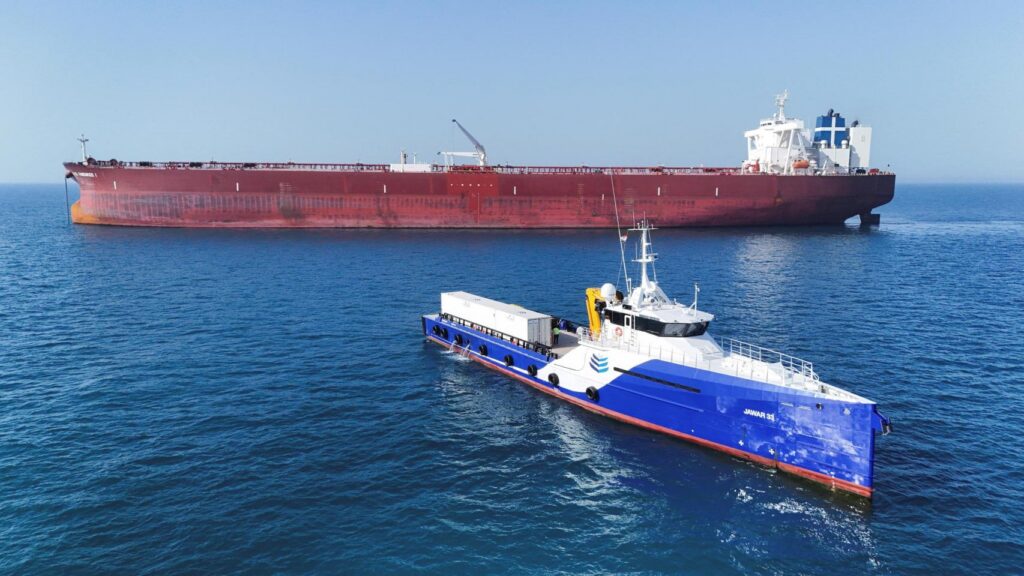
“Iran has announced that the Iran Strait is completely open and ready for passage,” he wrote. Donald Trump on his social network, Truth, this Friday morning, with that mixture of triumphalism and imprecise geography that characterizes him.
The markets responded with immediate euphoria: US crude oil plummeted 12% to around $83 per barrel, while international Brent also slid more than 11% to around $88.
The Dow Jones soared 1,000 points, the S&P 500 exceeded the 7.100 for the first time in history, and heating oil futures plummeted 13%.
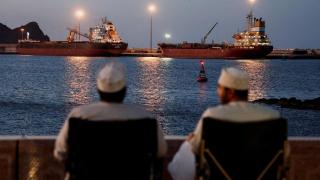
The problem is that the Iranian version differs slightly: the Foreign Minister, Abás Araqchiannounced that “in line with the ceasefire in Lebanon, passage for all commercial vessels through the Strait of Hormuz is declared fully open for the remaining period of the ceasefire.”
The difference is not minor: Trump talks about definitive opening, while Araqchi explicitly links it to the ceasefire in Lebanon.
Both also omit a key detail that observers have discreetly handled: at least nine oil tankers have transited the strait this weekalthough traffic is still a fraction of the 100 ships a day that passed before the war.
The strait was never completely closed to all ships, only to those who did not want to pay the more than a million dollar toll that Iran demanded.
Hezbollah and the unpredictable Netanyahu
The reasons for optimism are obvious, but also fragile. Pakistani mediators have managed to convince Tehran to make a visible concession that would allow Trump to claim victory, and that has created the necessary context so that talks can resume in the near future in Islamabad.
The fact that both the United States and Iran have agreed to a tacit extension of the ceasefire beyond April 22 suggests that both sides see real possibilities for an agreement.
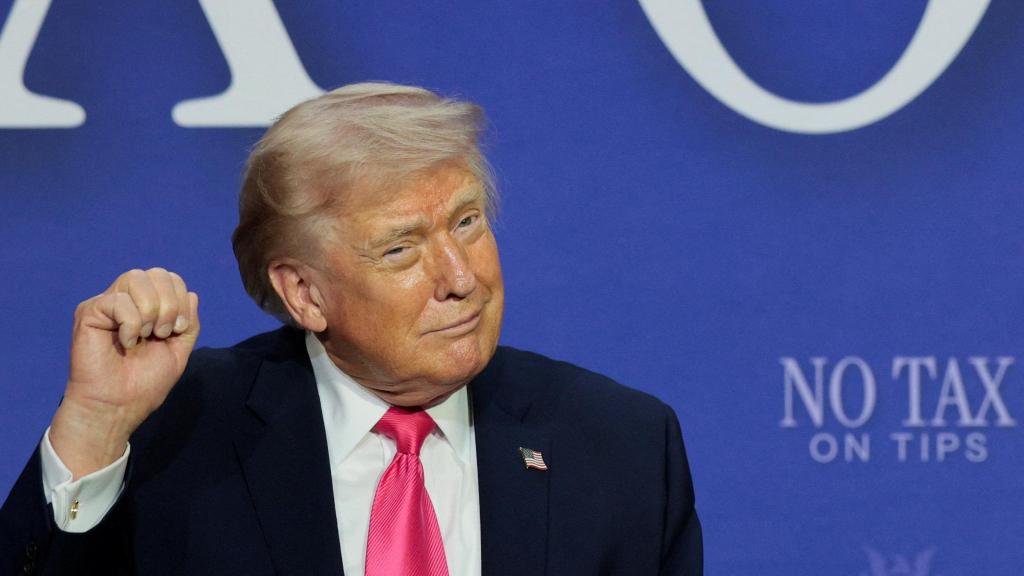
United States President Donald Trump during a roundtable discussion focused on tax cuts in Las Vegas, Nevada.
Reuters
Now, linking the opening of the strait to the maintenance of the ceasefire in Lebanon introduces an unpredictable variable: Benjamin Netanyahu.
The Israeli prime minister stated that his country had “agreed” to the temporary 10-day ceasefire, but that its forces would remain in Lebanon, occupying an “extensive” buffer zone up to the Syrian border, and that Israel’s key demand remained the disarmament of Hezbollah.
It is a demand that now depends on the will of the ayatollah regime and that, in principle, Hezbollah cannot accept as long as Israeli troops occupy Lebanese territory, which turns the ceasefire into a precarious truce that can blow up at any moment.
And if Israel bombs Lebanon again, Iran can close the strait immediately, sending oil prices back to $100.
In reality, the feeling is that Hezbollah emerges stronger from this equation. The Shiite group has managed to make its survival an essential condition for the agreement between Washington and Tehran to work, exactly the opposite of what the Trump Administration intended when this war began.
“Netanyahu failed in his stated objective of disarming Hezbollah,” acknowledged the former Israeli diplomat Alon Pinkas to the Qatari chain Al Jazeera. Now, everything depends on Iran “stopping” its terrorist militia, but it is not clear that this is the regime’s will.
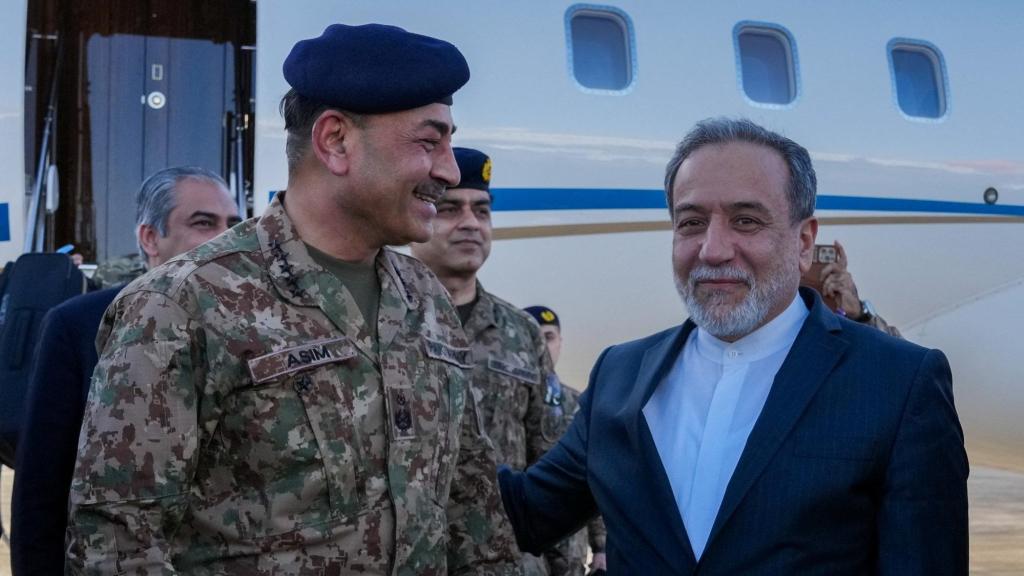
The Iranian Foreign Minister, Abbas Aragchi, receiving the head of the Pakistani Army, Asim Munir, in Tehran this Wednesday in Tehran.
Reuters / WANA
Back to the Obama deal?
In his rush to secure any kind of deal he can sell as a victory before the November election, Trump is legitimizing in fact to an organization that its own Administration classifies as terrorist.
Iran could not only keep its most powerful militia intact, but would turn it into a key piece of the regional peace architecture, something that Israel will not tolerate in any case.
One of the justifications for the war was the fact – true – that Iran financed international terrorism. Ending up rewarding Hezbollah would not make much sense.
Separately, the United States is negotiating a $20 billion uranium deal with Iran, as revealed this Friday. Axios.
The agreement would release frozen Iranian funds in exchange for Tehran handing over its arsenal of almost 2,000 kilos of enriched uranium buried in its underground nuclear facilities, including 450 kilos enriched to 60% purity.
The Iranians had initially demanded 27 billion, the United States only wanted to go up to 6 billion, and the final number of 20 billion seems to be enough for both sides.
The curious thing is that, if this point is confirmed, Trump would come dangerously close to the agreement they negotiated Barack Obama and his secretary of state John Kerry in 2015.
The irony is evident: Trump is recreating the Joint Comprehensive Plan of Action (JCPOA) that he himself left in 2018, when he called it “the worst agreement in history” despite pressure from his European allies, especially the French president, Emmanuel Macron.
No goal would be met.
A permanent ceasefire is closer than ever, but at a price that could prove strategically ruinous for the United States.
Trump will declare his media victory, but he will leave a Middle East where Iran maintains all its main assets: Hezbollah, armed and legitimized, $20 billion to finance its regional operations, and effective control over the Strait of Hormuz as a permanent blackmail weapon.
The ayatollahs have learned that closing the strait gives them a negotiating capacity that they did not have before: every time they do not like a decision by Israel, the Saudis, or the Americans themselves, they can threaten to cut off 20% of the world’s oil and gas.
It is a power that they will not return voluntarily and that not only guarantees the survival of the regime, but also represents a most lucrative business.
However, the most dangerous thing is the signal it sends about the nuclear program: Iran has discovered that it can develop uranium at 60% purity, negotiate from that position of strength, and obtain not only the lifting of sanctions, but cash in exchange for disarmament promises that it can break in the future, as it insisted. John BoltonNational Security Advisor during Trump’s first term, in the CNN.
The regime knows that its life, literally, depends on obtaining the nuclear bomb. And now he also knows that blackmailing the Straits works for him. Trump can get his deal, but Iran can get its nuclear weapon, which was precisely the main objective of the military operation.
The difference is that one is temporary, the other is forever.
You may also like
-
Saige Blair, the young victim of sexual harassment and abuse whom Trump has turned into a symbol of his anti-trans agenda
-
GAESA, the network of companies that hides the Castro fortune while Cuba faces shortages and blackouts
-
Field Marshal Asim Munir consolidates himself as a bridge between the US and Iran
-
Lula and Petro follow in Xi Jinping’s footsteps and encourage Sánchez to remain in the “trench” against Trump
-
The Government formally asks the EU Council for a debate to vote on the break with Israel despite the ceasefire in Lebanon