

“Sleep well, European partners!”. With this mocking tone, Dmitri Medvedev, vice president of the Russian Security Council and key advisor to Vladimir Putin, closed a message that marks a dangerous turning point: the direct singling out of European companies in the defense sector such as “legitimate military objectives” from Russia. A warning that moves the war to the industrial heart of Europe and puts the target on any company that supplies weapons to Ukraine.
Until now, the Russian government had made vague threats against Europe for its support for kyiv, but had never specified targets. This Thursday, however, the Ministry of Defense published a list with more than around twenty companies from 12 countries —among them, UAV Navigation, a Spanish subsidiary of the Oesía Group— which it accuses of supplying drones to the Ukrainian forces and thus collaborating in what Moscow calls “terrorism.”
“The statement must be taken literally: that list of European facilities that manufacture drones is a list of potential targets for our Armed Forces. When the attacks materialize depends on what comes next,” Medvedev warned in his usual warlike and hyperbolic style.
But the key is: why now?
This rhetorical escalation comes at a critical time for Russia on the Ukrainian front. Western sources agree that, after four years of war, the Russian Army is accumulating massive losses without significant territorial advances.
In fact, an analysis of The Economist February of this year estimates between 1.1 and 1.4 million total Russian casualties (dead, wounded and missing) from 2022 to early 2026, of which between 230,000 and 430,000 would be fatal. This is a figure that coincides with independent studies, such as those by the American think tank Center for Strategic and International Studies (CSIS), which raise the total to 1.2 million.
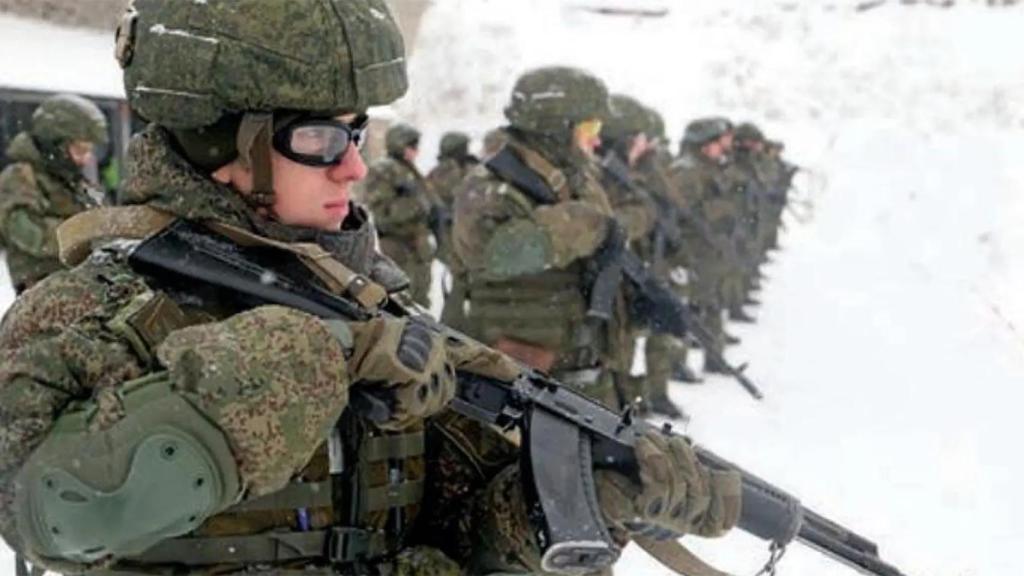
Russian soldiers in the snow.
In recent months, furthermore, the rate of Russian casualties has accelerated to exceed their recruiting capacity. A wear and tear that not only responds to the precarious training of the troops recruited and sent en masse to the “meat grinder”, but also to the sophistication and technological innovation of the Ukrainian forces.
According to a recent analysis of the Institute for the Study of War (ISW)the tactical advantage that kyiv has achieved in the use of drones has been a determining factor in slowing down Russian advances and even facilitating the latest Ukrainian counterattacks. It is not for less. Daily, Ukrainian drones carry out more than 11,000 combat missions and, in March alone, they attacked more than 150,000 targets (twice as many as in February), according to the commander-in-chief of the Ukrainian armed forces, General Oleksandr Syrskyi.
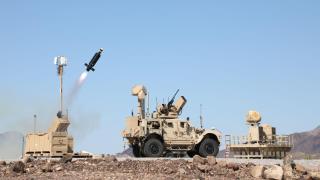
This strategy has led them to achieve a historic milestone in modern warfare. That was, at least, what the Ukrainian president communicated a few days ago, when he noted that his forces had successfully captured an enemy position using drones and other robotic ground systems, without the direct participation of infantry. “A robot went to the most dangerous areas instead of a soldier,” the president said in a video.
Russia, although it does not confirm its defeats, seems to have become nervous. Perhaps not so much because of what Ukraine is achieving, but because of what it could achieve. In the last week, during a tour of Europe, Zelensky has managed to close agreements with companies from countries such as Germany, Norway and Italy to produce drones in their respective territories.
Added to the success of this diplomatic tour is a strategic victory: the fall of Viktor Orbán’s ultranationalist government in Hungary. The until now prime minister, designated as “Putin’s Trojan horse in the European Union” for his close ties and concessions to Moscow, maintained an open political war against Ukraine.
And Orbán has been blocking for months a European loan of 90 billion euros in aid that already had the approval of the European Council. Now, with the departure of the ultranationalist and the rise of the conservative Péter Magyar, who has shown a clear line of rapprochement with the EU, kyiv could soon receive the funds it so badly needs. According to a Bloomberg report, Ukraine faces the imminent risk of running out of funds to finance its defense in just two months.
Russia begins to run out of funds
In parallel, Russia is beginning to admit the cracks caused in its economy after four years of war and sanctions. Although Vladimir Putin downplayed the reestablishment of the sanction on its oil exports, which the US temporarily lifted to alleviate the shortage caused by the war in Iran, the Russian president admits that there are problems.
The resilience of the Russian economy was until now one of the Kremlin’s reasons for boasting: after contracting sharply in 2022, grew again in the following three years despite the wear and tear of war and the measures imposed by the West, the most onerous ever imposed against a country.
However, by the end of 2025 this growth had been reduced to 1%, the Russian president admitted in a meeting with his main economic advisors in the Kremlin. AND In the first two months of 2026, it contracted 1.8%he warned.
The increase in the price of crude oil after the closure of the Strait of Hormuz seemed to play in Russia’s favor. However, the Ukrainian offensive on its oil infrastructure and ports in the Baltic has cut off this route considered safe until now, reducing up to 40% of its export capacity.
All these circumstances contribute to the discontent of Russian societyexacerbated by Internet and mobile device blackouts imposed by the Kremlin for security reasons. Timid at first, Russia is witnessing the largest anti-government demonstrations since the start of the war four years ago, when they were harshly repressed.
You may also like
-
Russia practices the ‘hybrid war’ in Poland with which it now threatens Oesía
-
The Israel-Lebanon truce clears the way for Iran and the US to return to the negotiating table in Islamabad
-
Sánchez conditions that Spain participate in Starmer and Macron’s mission in Hormuz that it be under UN command
-
For 10 years it will be able to buy the same weapons as NATO countries
-
they were able to get out through a hole