
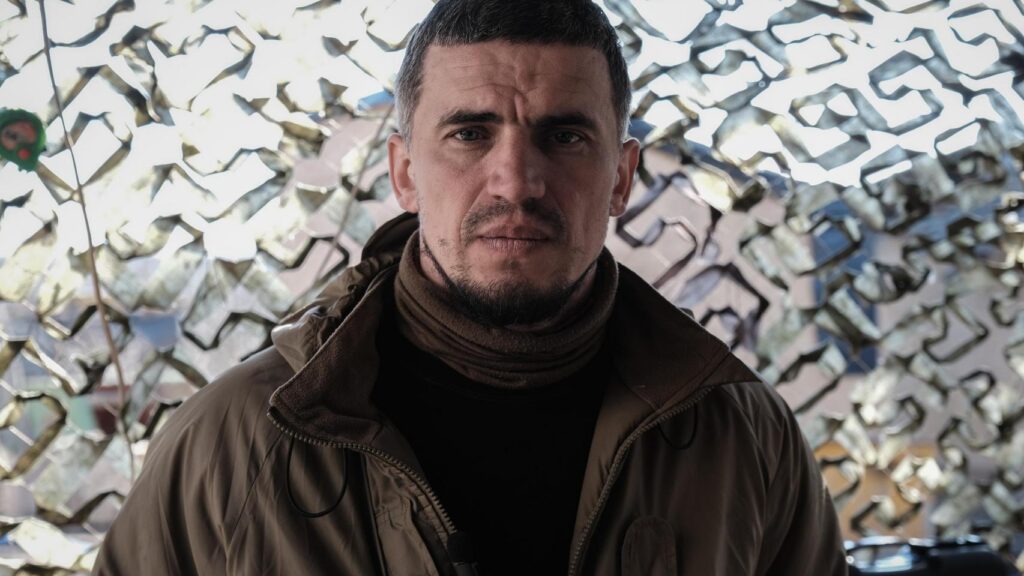
Now that the war narrative is focused on the use of drones, and Ukraine has become the West’s oracle on how to shoot them down, The armies of half the world are looking at the sky. But here, on the black earth that covers the Donbas front, the fighting continues. And the forces of Zelensky They still desperately need more soldiers to hold down the trenches.
The lack of personnel willing to fight on the front line long ago became one of the main problems of the Ukrainian Army, which has had to resort to forced mobilization in order to continue supporting the combat front.
Aware of the loss of popularity that this measure would entail, President Zelesnki delayed as long as he could the approval of the Mobilization law – which allows men between 25 and 60 years old to be detained in the middle of the street, and sent to a military training center. But in April 2024, he had no choice but to sign it.
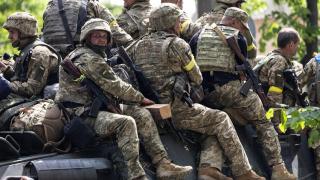
What was less talked about at that time is another amendment that was approved almost at the same time as the Mobilization law, and that makes it possible to recruit certain categories of prisoners who wish to enlist voluntarily. The conditions are clear: if they serve one year in the Army, their conviction is annulled; but they must serve on the front line of combat, carrying out assaults – something that almost no one wants to do.
“We only recruit infantry and assault infantry. They are going to do the hardest work, but they know it in advance. We inform them clearly that there is no option to be a driver or to sit in some quiet position. We recruit only men who will fight”explains Valentín Lyaskovsky, the commander-in-chief of the Alcatraz Battalion.
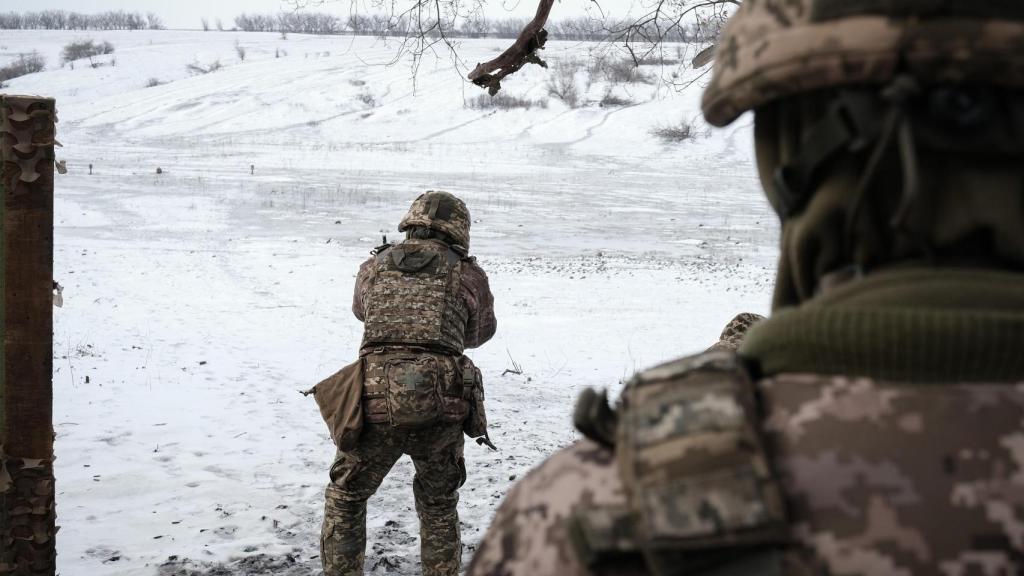
Recruits from the Alcatraz Battalion learn how to use the Kalashnikov during training
A bird in shackles
Currently there are several military units that house these ex-convicts, but the first one that was created was the Alcatraz Battalion. The name says it all, and if there are any doubts, their emblem clears them up: on their uniform patch they have an eagle with a shackle on one of its legs, and a chain attached to an iron ball – like those worn by prisoners condemned to forced labor in the 19th century.
They belong to the 93rd Mechanized Brigade of the Ukrainian Army, and are deployed in Donbas. At first glance, a cell may seem more appealing than that combat front, but after almost two years of operation, the Alcatraz Battalion has more and more requests of inmates who want to join.
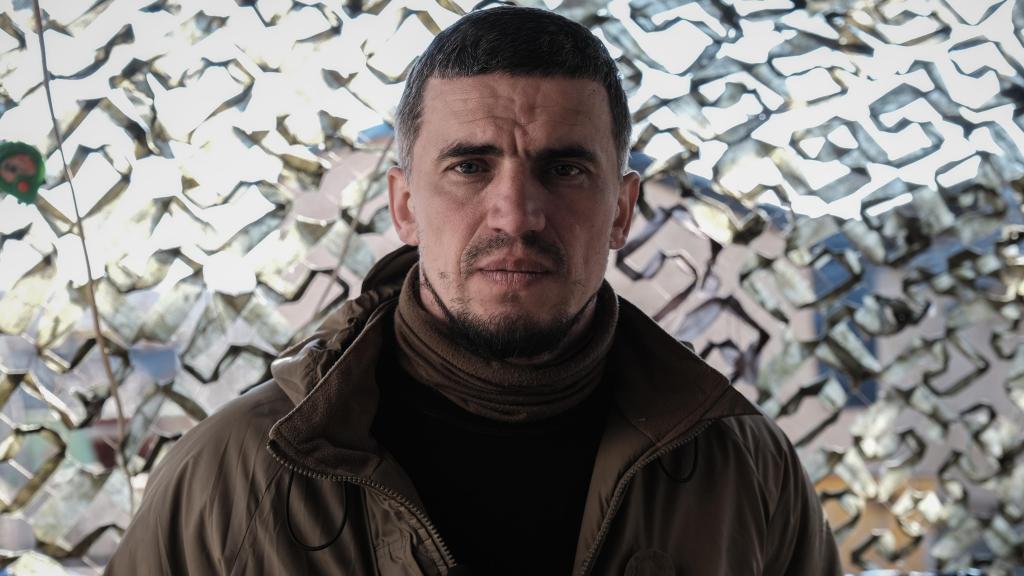
Valentín Lyaskovsky, commander in chief of the Alcatraz Battalion
“We don’t accept everyone, only 30% of those who apply pass the screening,” reveals Lyaskovsky. “That’s why we go to prisons in person, to be able to do interviews and see their physical, moral and psychological level. And also their mental abilities: we need people who think, because we are going to train them, we are going to give them knowledge and material, we are going to invest time and resources in them, and we want them to survive in the long term. So we don’t take just anyone”, he adds.
The training includes specialized classes in combat medicine, trench assault techniques, target practice, and all the teachings that non-prison recruits receive. But they don’t mix with them. They train in a separate maneuvering field.
“I was sentenced to six years in prison for theft of a bank card. I served two years and then I decided that I had to do something useful for all of us,” says one of the recruits who is being taught how to handle the Kalashnikov, in the middle of the snow, on that maneuvering field. His name is Alexander and he is 37 years old.
“My younger brother was serving in the Army when I was convicted, that’s why I made the decision to join too,” he continues, “because I wouldn’t be left behind in a cell. But I had to wait for the judicial process to finish, and that lasted two years.”
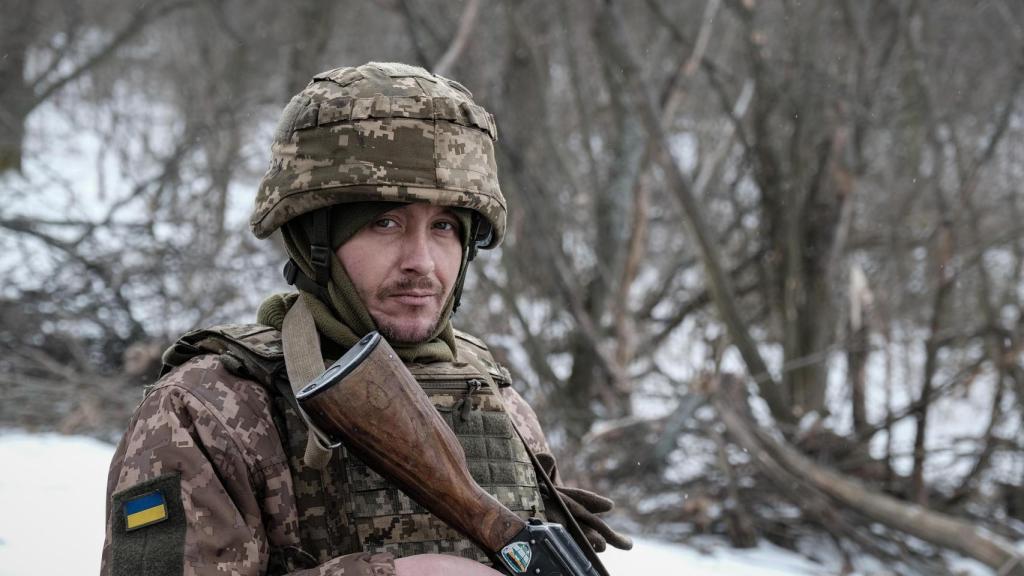
Alexander, recruit of the Alcatraz Battalion.
He is from Krivoy Rog, Zelensky’s hometown. His hands are red from the cold, and skinned from pinching himself while refilling rifle magazines, but he doesn’t stop smiling. “I’ve been here for two weeks and everything is very good. I like it, I’m learning because there are good instructors. Honestly, I didn’t expect something like this,” he admits, a little surprised.
Neither traitors, nor rapists
Alexander is one of the more than 11,000 inmates who have already joined the Army, according to official data from the State Penal Executive Service. “We have the list of crimes, and if the crime the person committed is among those crimes, they have the opportunity to join the battalion,” continues their commander.
“It is a long process: we have to coordinate with the penal colony, with the prosecutor’s office, with the court. And the final decision to hand over the person to fight with us is made by a judge,” Lyaskovsky adds.
This list of crimes to which the Alcatraz commander refers includes theft, fraud, illegal possession of property or drug-related crimes. However, people convicted of treason, terrorism, corruption, rape or premeditated murder They can’t change their sentence for a Kalashnikov.
“I ended up in jail after a judicial process under article 120-1-2. That corresponds to causing serious bodily injury with a lethal result,” explains ‘Malchik’, avoiding pronouncing the word murder to tell the reason for his conviction. He’s one of the youngest recruits I see, and he’d rather cover his face than have his photo taken.
“Actually I always wanted to go to the army, but being a minor I couldn’t, and when I came of age I got into other problems,” he continues. “Then I was in a hospital, in rehab, and when I came out there was a fight. I hit a person, and that person died. I was 20 years old at the time.”
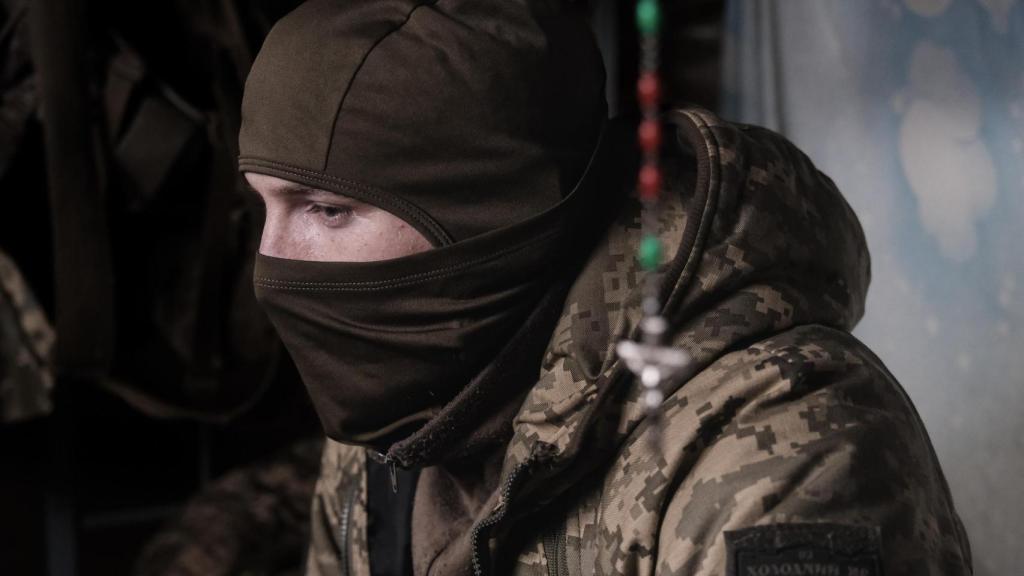
‘Malchik’, recruit of the Alcatraz Battalion
‘Malchik’ – which in Ukrainian means ‘the boy’ – is 26 years old today, but despite his youth he believes that the Army is his last opportunity: “Now I am motivated to be here, I am attracted to weapons, I don’t know how to explain it better. For me, being a soldier is a life option. Because the other option is to jump from one occasional job to another or end up on the street, and that leads to nothing,” he says.
“I already had a second-degree concussion and multiple shrapnel wounds, but I still want to stay here,” he says when I ask him if he knows that he is going to fight doing the toughest missions of the war, the ones that no one wants to do.
There is no escape, only victory
Although these men’s sentences are overturned after one year of service in the Army, None of them will be able to return to civilian life until the war is over.. Exactly like the rest of the Ukrainian soldiers.
And in the maneuver field where the 93rd Brigade is training them there are no bars or wire fences. There are also no security guards guarding the entrances, because there are not even entrance doors. They are in the middle of nowhere, and the question is obligatory: Aren’t they worried that they will escape?
“You cannot watch a soldier 24 hours a day. That is why the selection process is so important, to choose only people who really want to fight,” responds Commander Lyaskovsky.
Surprisingly, the figures prove him right: Alcatraz has fewer desertions than most Ukrainian brigades, which in many cases are made up of soldiers who have been forcibly mobilized, and who did not want to go to the Army voluntarily.
“There have been very few escape attempts here, and they have all been frustrated. When something like this happens, the person loses our trust and is closely monitored; if we see that they have no motivation, we return them to prison. They risk losing their freedom again,” he asserts.
“The first motivation of these men is want to be freeso they are very motivated men. And more disciplined than most, because they are used to prison rules,” says the Alcatraz commander. “Here they have an opportunity, because we don’t send people to die, we don’t do that; Although the reality is that some survive and others die. It is war.”
You may also like
-
Former French Socialist Prime Minister Lionel Jospin dies at 88
-
“Comrade” Kim Jong-un, re-elected head of state of North Korea for the third time, without rivals and by a large majority
-
there are at least four injured
-
War in Iran, live today | Tehran threatens "respond in the same way" if the US attacks its nuclear plants
-
The left resists in Paris and Marseille, the two largest cities of France