
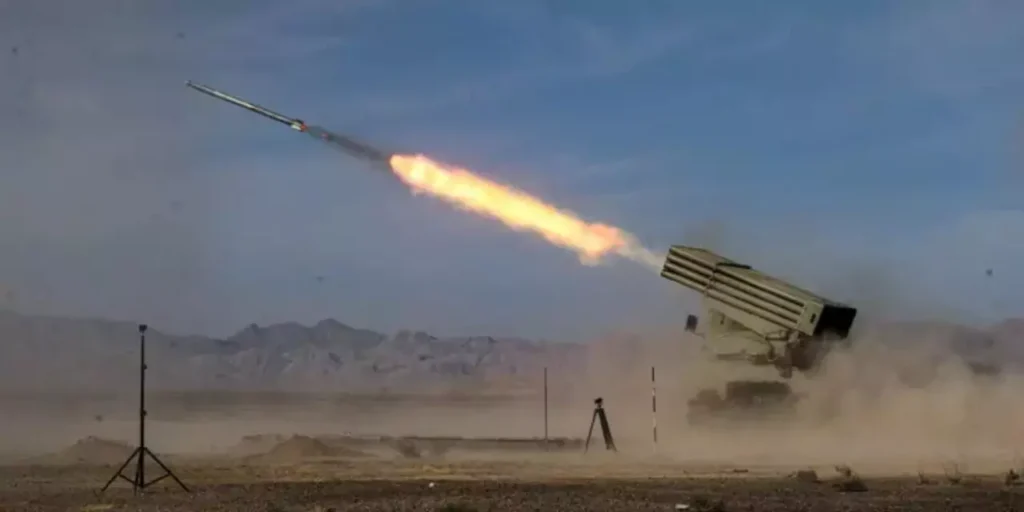
The military offensive launched by the United States and Israel against Iran has led to a geopolitical crisis that threatens to destabilize the Middle East and cause economic repercussions on a global scale.
In addition to the air attacks recorded in recent days, Washington does not rule out the possibility of deploying troops for a ground operation, a scenario that could expand the conflict in the region.
Meanwhile, the confrontation has already left at least seven US soldiers dead, which has intensified the political debate within the American Union itself.
CRITICISM OF TRUMP GROWS
Various analysts and columnists from The New York Times have questioned President Donald Trump’s strategy, considering that the decision to attack Iran could drag his country into a prolonged war.
Specialists Jeffrey Feltman and Mara Karlin point out that Washington would have underestimated the magnitude of the Iranian response.
For his part, columnist Nicholas Kristof warned about the risks of repeating past mistakes:
“President Trump and Israeli Prime Minister Benjamin Netanyahu, architects of this war, appear to be afflicted by the arrogance of power.”
Kristof also recalled previous conflicts led by Washington, such as the wars in Afghanistan and Iraq, which left profound human and political consequences.
A LONGER THAN EXPECTED WAR
Experts point out that Washington’s initial plan seemed to be betting on a “blitzkrieg,” aimed at destroying Iran’s military capabilities — including its missile program and nuclear infrastructure — and promoting a change of government.
However, Russian military analyst Boris Dzhereliyevski maintains that this strategy has not given the expected results.
In his assessment, the attempt to bring about the collapse of the Iranian political system through targeted attacks against its leadership failed to weaken the state.
After the attacks that led to the death of Supreme Leader Ali Khamenei, religious and political power was assumed by his son, Mojtabá Khamenei, considered by analysts to be a more radical figure within the Iranian system.
IRAN MAINTAINS MILITARY CAPACITY
According to historian and journalist Georgi Bovt, the change in leadership also evidenced the political weight of the Islamic Revolutionary Guard Corps (IRGC) within the country.
Experts cited by the analyst assure that Iran would have kept up to half of its missile arsenal, which would allow it to continue attacks for several months.
In fact, the IRGC claims that the country has carried out more than 30 waves of missile and drone attacks, targeting Israeli military installations and US bases in the Middle East.
THE RISK OF A “PYRRHIC VICTORY”
For some analysts, even if Washington manages to declare a military victory, the political and economic cost could be high.
Bovt warns that a prolonged war could affect not only the regional economy, but also the global energy market, due to the strategic importance of the Middle East in global oil supplies.
“If Trump declares victory after such a long war, it would be a classic Pyrrhic victory,” the analyst stressed.
A CONFLICT WITHOUT A CLEAR EXIT STRATEGY
While Secretary of State Marco Rubio has reiterated that the goal is to destroy Iran’s military capabilities, including its missile arsenal and naval fleet, Trump himself has suggested that the conflict could end soon.
The president assured that Tehran would have lost a large part of its military capacity, although specialists consider that the situation on the ground is more complex.
For several international analysts, the main problem for Washington is to define how to end the conflict without further expanding the war, a challenge that has historically marked many military interventions.
A WAR THAT COULD EXTEND
In parallel, experts warn that Iranian society could close ranks in the face of external aggression, strengthening internal support for the government.
According to analysts, without a ground operation and without territorial control, it would be difficult to modify the Iranian political system or bring about a regime change.
The evolution of the conflict suggests, as Bovt summarizes, an old geopolitical lesson: wars are often easier to start than to end.
You may also like
-
Another Mexican migrant dies in ICE custody: SRE demands justice and immediate measures
-
“I am not afraid of him”: Pope Leo XIV responds to Donald Trump’s attacks from the air
-
Tension at the limit in Hormuz: Iran threatens and the US warns “brutal” naval blockade
-
US announces blockade in Hormuz after failure with Iran and raises global tension
-
What does the new postponement of “El Mayo” Zambada hide? Keys to negotiation in New York