
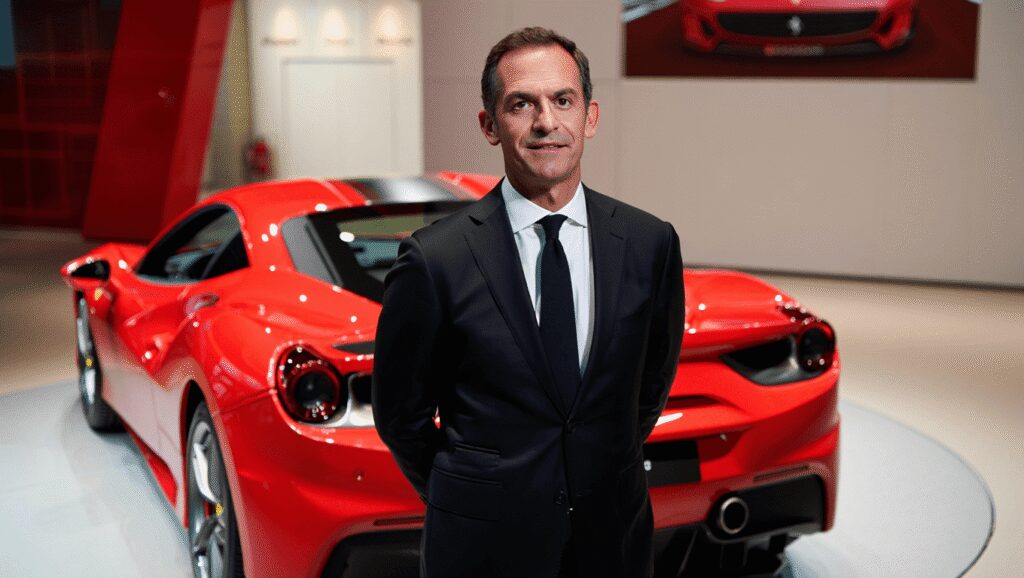
Ferrari’s CEO ignited another discussion in the automotive industry by stating that the main reason behind the explosion of touch screens in cars was not user experience, but economic savings. That fact changes how the transition to digitalized interiors should be read and has direct effects on what drivers buy and use today.
In a recent interview with the specialized press, Benedetto Vigna explained that the migration towards touch systems responded above all to financial calculations. While Tesla wasn’t solely responsible for popularizing the idea—the Model S showed the possibilities—mass adoption accelerated when the price of electronic components fell enough to offset integration costs.
According to Vigna, touch modules are substantially cheaper than traditional physical panels and controls: in simple terms, they represent almost half the cost. That economic margin benefited manufacturers and component suppliers, but not necessarily ergonomics or ease of use for the driver.
What does this mean for users?
The impact is not only discursive. The preference for screens has caused some brands to reconsider their strategy and others to try to differentiate themselves by recovering buttons and knobs.
Volkswagen, for example, publicly acknowledged that its commitment to touch interfaces in popular models was a mistake and announced that it will reintegrate physical controls in future updates. Ferrari, for its part, uses the combination of screens and traditional controls as a sign of identity: recovering mechanical elements is part of its value proposition for customers who expect an “authentic” experience behind the wheel.
At the same time, the trend is not homogeneous. While some premium brands return to switches, others are betting on fully digital interiors: BMW recently presented a model with a large central screen without physical buttons, seeking a more futuristic and minimalist look.
The middle ground: hybrid design
Ferrari’s first all-new electric, the Luce, illustrates that middle ground stance. The vehicle includes a screen compatible with Apple CarPlay and Android Auto, but it is integrated into a console that retains multiple touch and mechanical controls for essential functions, as well as a separate analog clock.
That approach pursues two clear goals: maintaining ease of use for critical controls like climate control and offering an experience perceived as safer and more direct than that offered by deep touch menus.
- Safety and ergonomics: physical buttons allow you to activate functions without taking your eyes off the road; Touch menus can increase cognitive load.
- Costs and maintenance: Screens facilitate design and reduce initial costs, but their repair or replacement is usually more expensive than a traditional remote control.
- Updates and obsolescence: The software can improve with OTA updates, but the touch hardware ages and suffers from different failures than the mechanical components.
- Brand positioning: premium manufacturers use physical controls as a sign of authenticity; others seek total modernity with digital interiors.
- Supply chain: Suppliers of displays and electronic modules gained share through serial cost reductions.
In practical terms, this leaves buyers facing more complex decisions: do they prioritize a clean, updatable interface or do they prefer straightforward, tested controls? The answer will depend on the segment, the use and how much each driver values simplicity over modernity.
While the industry seeks balance, it will be necessary to monitor two factors that could tip the balance: official studies on distracted driving and regulations that regulate the accessibility of controls in vehicles. For now, the outlook is one of coexistence: screens for information and physical components for essentials, a formula that promises to be the norm in many future releases.
Similar items

Diego Soler explores technological trends and digital innovations. You will enjoy practical tutorials and direct advice to better understand artificial intelligence, cybersecurity and new technologies.
You may also like
-
Android and iPhone: video calls between mobile phones without installing anything
-
Pixel 11: first photos reveal design and key functions of the new Google
-
how to download APKPure and older versions on Android
-
Is your mobile internet slow? The hidden trick on your cell phone to browse faster without paying more
-
Bluesky launches Attie: design your algorithm and feed with AI from text