
In one of the most delicate moments for Iran since the war with Iraq in the 1980s, the assassination of the Supreme Leader, Ayatollah Ali Khamenei, has opened a regional crisis whose consequences will be measured in years, not weeks.
The death of the Iranian leader occurs in the context of a military offensive launched by the United States and Israel on Iranian territory, and of a clear response by Tehran that has imposed calculated strategic costs on those it considers responsible for the attack.
The magnitude of the moment demands an analysis that moves away from the clichés that often dominate Western conversation about Iran. The Islamic Republic is often described through simplistic binaries: a fragile or irrational systemon the verge of collapse or dominated by fanaticism. None of these frameworks adequately explains either the structure of the Iranian state or the strategic logic that guides its behavior.
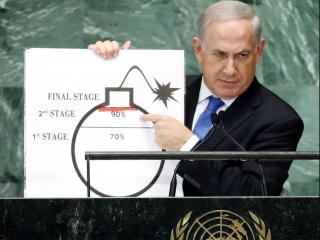
Before the attacks, Iran was involved in nuclear negotiations indirect with the United States mediated by Oman. The diplomatic channel existed and, although fragile, remained operational. Washington and Tel Aviv’s decision to resort to military force was based on the recurring premise in certain Western strategic circles that the Iranian political order is inherently fragile and that lexternal pressure could cause it.
Recent history demonstrates the opposite. Iran is not a vulnerable microstate. It is a large country, with historical continuity and accumulated experience in resistance to invasions, sanctions and prolonged conflicts. The belief that several days of bombing could cause an immediate collapse reflects a limited understanding both the Iranian state capacity and the cohesion of its elites.

The late commander-in-chief of the Revolutionary Guard Corps, Major General Hossein Salami, checks military equipment during a military exercise in the Aras area, East Azerbaijan province, Iran, on October 17, 2022.
Reuters
At the moment, there are few signs of fracture on the cusp of the system. Even targeted attacks against key figures do not automatically translate into the collapse of the political architecture underpinning the Islamic Republic, as is being seen.
The Islamic Republic was designed to withstand situations of extreme pressure. Power is distributed among partially overlapping institutions: religious authorities, Revolutionary Guardconventional armed forces, security services and a dense state bureaucracy. This architecture is not accidental. It emerged from the experience of the 1979 revolution and the war with Iraq, and aims to ensure the continuity of the system under extreme pressure.
The position of Supreme Leader is not equivalent to that of a conventional head of state. Its authority derives from the doctrine of velayat-e faqih, which guarantees political continuity and institutional cohesion in the absence of the twelfth imam of shism. The leader acts as an arbitrator between institutions and guarantor of the strategic sovereignty of the system. The elimination of specific leaders hardly causes an immediate collapse.
Western expectations about Iran’s fragility are frequently overestimated. Military force can degrade capabilities or impose costs, but it is unreliable in producing profound political transformations in a complex and cohesive State.
Iran faces structural problems important: economic pressure, erosion of legitimacy, demographic changes and internal social tensions. However, structural stress does not equate to imminent collapse. During the Twelve Day War in June, for example, the population rallied around the system in a phenomenon that analysts called “grouping around the flag”.
The popular mobilization against external aggression was massive and expressivealthough internal tensions persist. This capacity for cohesion demonstrates how Iran integrates external pressure and perception of strategic sovereignty, absorbing blows without compromising its institutional continuity.
Article 111 of the Iranian Constitution provides that, in the absence of the Supreme Leader, an interim council will oversee the transition until the Assembly of Experts elects his successor. The Assembly of Experts is a constitutional body made up of 88 members elected by popular vote. Their role is to supervise the Supreme Leader and, if necessary, appoint his successor.
This mechanism was designed to prevent the stability of the system depend exclusively on an individual figure. Formally that will be the process, but in practice consensus is usually formed through informal negotiations between religious and security elites before being ratified by the Assembly.
Among the most frequently mentioned names are Alireza Arafi, head of religious schools, and Gholam-Hossein Mohseni-Ejei, head of the judiciary and former intelligence minister. Both represent clerical legitimacy and institutional experiencealigned with the tradition of structured resistance of the Islamic Republic.
Two of the most mentioned candidates present particular difficulties. Mojtaba Khamenei, son of the deceased leader, wields influence within the Supreme Leader’s office and in the intelligence apparatusbut his religious credentials are limited and he may carry the perception of having inherited his father’s authority. Hassan Khomeini, grandson of the founder of the Islamic Republic, has taken on a visible public role, even standing in for Khamenei at official ceremonies.
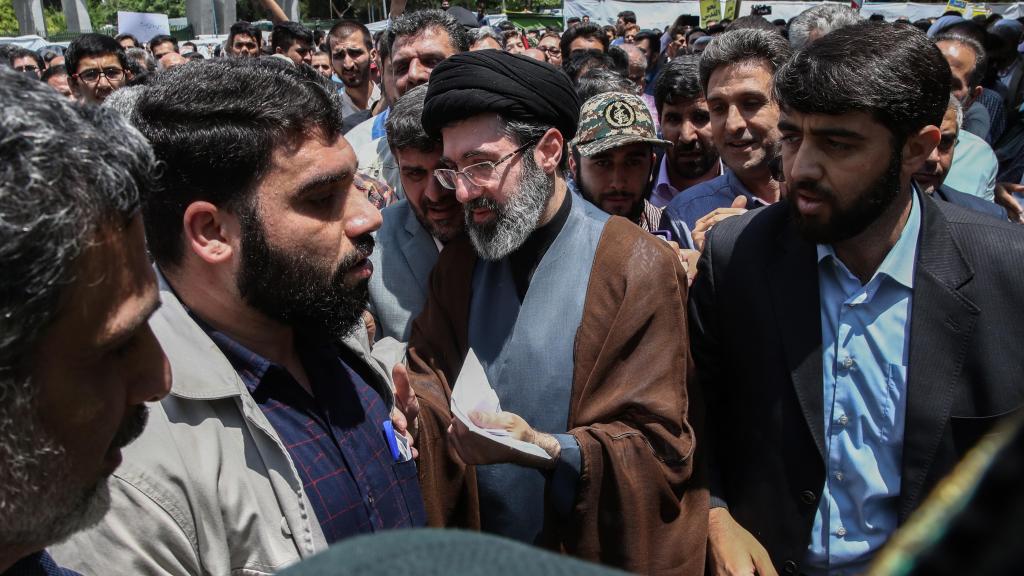
Ayatollah Ali Khamenei’s son, Mojtaba Khamenei.
Europa Press
In 2016, however, it was excluded from the Assembly of Experts due to insufficient religious knowledge. The Islamic Republic has historically shown resistance to hereditary succession, making any candidate from these families a controversial choice. The final choice will likely reflect a balance between religious legitimacy, political experience and acceptance within security institutions.
This moment also evidences a significant contrast between Western perception and local reality. In international media, the Iranian diaspora in the West has been overrepresented. Some voices, including figures such as Reza Pahlavi, have supported the bombings and offensive against the Islamic Republic without reference to civilian casualties in Iran.
For many Iranians inside the country, these positions seem disconnected from everyday life and the direct experience of war. This phenomenon contrasts with daily demonstrations of support within Iran and in other countries in the region such as Iraq, Lebanon, Pakistan and India.
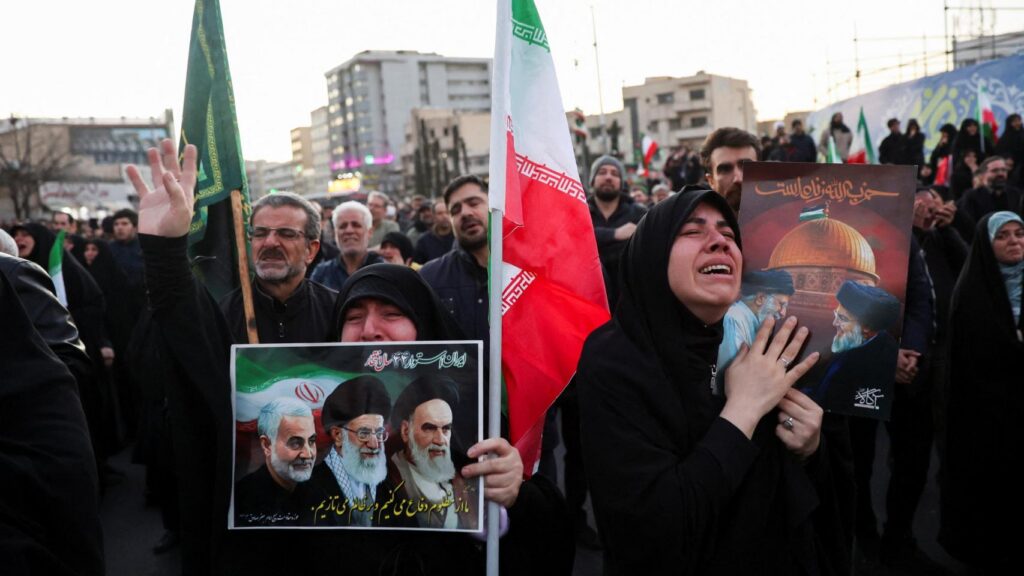
In Tehran and other cities, the response of the population that supports the Islamic Republic has been massive and expressive, reflecting a structural support for the continuity of the system in the face of external aggression and a perception of war as strategic defense rather than as an isolated conflict.
This pattern matches what native informants observe in field studies: many diaspora voices approach Western politics with aspirations for recognition and social whiteness, while remaining disconnected from the direct experience of life under attack or sanction in Iran.
Fidelity to the project
The Iranian response is articulated around a resilience approach. Indirect deterrence, asymmetric influence, and careful management of escalation have been deliberate strategies for decades. Containment has allowed us to project capacity and determination without losing operational flexibility.
The story of Karbala, where Imam Hussein He died facing a power considered unjusthas become a moral and cultural paradigm of prolonged resistance, and continues to inform the political narrative about martyrdom and collective sacrifice. The death of political or military figures can be reinterpreted within this tradition as confirmation of fidelity to a political project that is conceived as defensive against external pressures.
The current crisis tests the historical and structural resilience of the Islamic Republic. Khamenei’s death does not represent a strategic fracture. Institutions were designed to absorb individual losses and ensure continuity. The internal popular mobilization, combined with the institutional response, shows a system that balances resistance and pragmatism.
Attempting to transform Iran solely through military force underestimates decades of experience in resilience, social cohesion, and long-term strategy. The Iranian reality, both in terms of state and society, is more complex than the reductionist image offered by much Western analysis. Understanding this dynamic requires looking not only at leaders but also at to the population and regional actorsand differentiate between the overexposure of the Western diaspora and daily political life in the country.
*Xavier Villar is a political analyst and doctor in Islamic Studies.
You may also like
-
Jessica Foster, the AI-generated pro-Trump influencer who has more than 900,000 followers on Instagram
-
Trump redoubles his pressure against Cuba and prepares to charge, capture and try its leaders: “They will fall very soon”
-
Trump Demands Unconditional Surrender to Iran, Ayatollahs’ Response Hits 15 Countries With Russian Aid, and World Economy Staggers
-
Trump announces that there will be no agreement with Iran without “unconditional surrender” and demands a new “acceptable” leader
-
about 166 billion dollars