
The keys
nuevo
Generated with AI
nuevo
Generated with AI
The National Assembly of Senegal has approved a controversial bill that toughens the penalties against homosexual relations and increases the current sentences, which range from one to five years in prison, between five and 10 years.
assures that this law “pushes people into and away from services that can save their lives,
The rule, debated in Parliament at the request of the prime minister, Ousmane Sonkowas approved by 135 votes in favor, compared to three abstentions and no votes against.
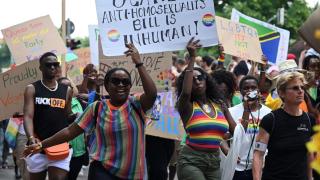
In the legislative project, which must now be promulgated by the Senegalese president, Bassirou Diomaye Faye, It is established that any person who has committed an “act against nature” will be punished with a prison sentence of “five to 10 years.”
“This law is, above all, cultural. No one has the right to impose their own values on others (…). While in the West polygamy is prohibited, “In Senegal we have the right to prohibit acts against nature,” declared before the House the Minister of the Interior, Bamba Cisse, representing the Senegalese Government.
The new text modifies article 319 of the Penal Code, which already criminalized relationships between people of the same sex.
Fines of 15,000 euros
Likewise, it increases the fines – which could reach 10 million CFA francs (more than 15,000 euros), compared to the current 1.5 million (about 2,300 euros); and persecutes those guilty of “apology” for homosexual relationships.
The reform occurs in a context of growing social and media pressure around homosexuality in this Muslim-majority country, where the issue continues to be highly sensitive.
In recent weeks, several arrests for alleged homosexuality —including those of well-known figures on social networks and in the world of entertainment— have revived the public debate.
In this context, reform has been one of the main political banners of Prime Minister Sonko, who took office in April 2024 and had insisted on multiple occasions on his willingness to toughen sanctions.
In fact, at the end of February, when presenting the bill before the National Assembly, Sonko denounced alleged obstacles, both internal and external, that, according to him, would have prevented similar advances in the past, including pressure from “organized interest groups.”
Local human rights organizations had warned about an increasingly hostile environment, characterized by campaigns on social networks and demands to tighten current legislation.
Of the more than 70 countries that criminalize relationships between people of the same sex in the world, thirty are found in Africa, where the majority of laws of this type are inherited from the colonial period.
HIV treatments
Winnie the Poohexecutive director of the Joint United Nations Program on HIV/AIDS (UNAIDS), says that regulations like this “aggravate stigma” and make it difficult for people to receive vital treatments for their health.
“These types of laws push people underground and keep them away from services that can save their lives, aggravate stigma and fear and endanger lives,” Byanyima said this morning on the social network X.
“Laws should protect people’s dignity and health, not punish them for being who they are. Let God judge,” he added.
You may also like
-
A judge annuls the subpoenas to Federal Reserve Chairman Jerome Powell, understanding that the case against him is “unfounded”
-
Landfill biogas powers green dome that grows fruits and vegetables: unique project
-
US offers $10 million reward for information on Iranian leaders after saying Khamenei is “disfigured”
-
The former president of Brazil Jair Bolsonaro, admitted to the ICU for bronchopneumonia
-
Sebastián Marset, one of the five most wanted drug traffickers by the DEA in the world, is captured in Bolivia