
The fragility of the ceasefire agreement of two weeks, reached against time between the United States and Iran, has been laid bare in its first 24 hours of validity.
The pact depends on Tehran keep the Strait of Hormuz opena strategic artery of the Persian Gulf through which much of the world’s energy trade flows and which Iran had de facto blocked, shaking international markets. Also, that Washington ceases its bombing of the Persian country.
However, it is the loose ends that now threaten to disrupt the truce, reached thanks to the mediation of Pakistan and which foresees new rounds of negotiations. for a definitive peace starting this Saturday in Islamabad, its capital.
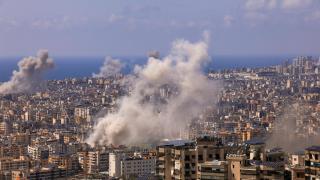
Iran has not been slow to respond. The Revolutionary Guard has threatened a military response against “regional aggressors” if attacks in Lebanon do not immediately cease. It has also Strait of Hormuz closed again and has warned that will withdraw from the ceasefire agreement if attacks continue, according to the Iranian news agency Tasnim.
Iranian Foreign Minister Abbas A.raghchi – one of the negotiators identified by the United States as possible interlocutor at the Islamabad summit-, made it clear on Wednesday that the end of the Israeli offensive in Lebanon was an indispensable condition.
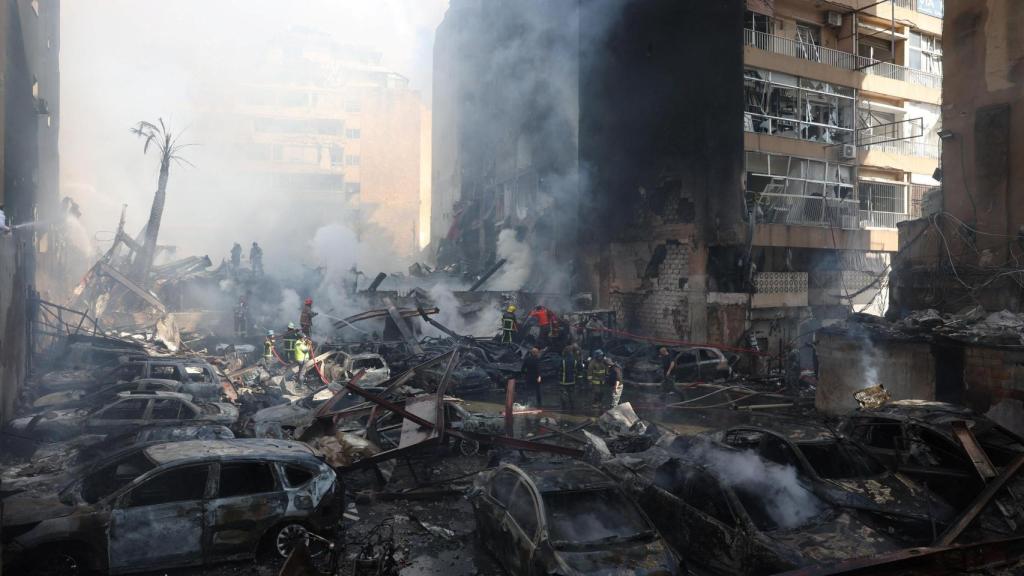
Consequences of the massive Israeli attacks in Lebanon on April 8, 2026.
“The United States must choose between a ceasefire or continue the war through Israel. You can’t have both,” declared the Iranian representative. “The terms of the Iran-US ceasefire are clear“.
In Tehran’s eyes, Israel’s persistence in its intention to apply the “Gaza model” to southern Lebanon endangers the agreement, and holds the United States responsible for the reactivation of the conflict. “The world sees the massacre. The ball is in the US’s court and the world is waiting to see if it will fulfill its commitments,” he says.
“The US must choose between a ceasefire or continuing the war through Israel. It cannot have both,” said Iran’s Foreign Minister Abbas Araghchi in a post on X.
For the moment, the Trump Administration has been clear. The president himself has declared in several interviews with American media that Lebanon is left out of the agreement. Subsequently, White House Press Secretary Karoline Leavitt reiterated the same thing.
And although in a press conference he stated that the Strait of Hormuz was not closed, Leavitt later demanded that it be “reopened immediately”, generating uncertainty about the true situation in the area.
Some Persian Gulf countries have also reported dozens of Iranian missile and drone attacks this Wednesday. This is the case of Kuwait, whose Army claims to have suffered 28 attacks with Iranian drones, some of which targeted “vital oil and energy facilities.”
Israel-US Unity
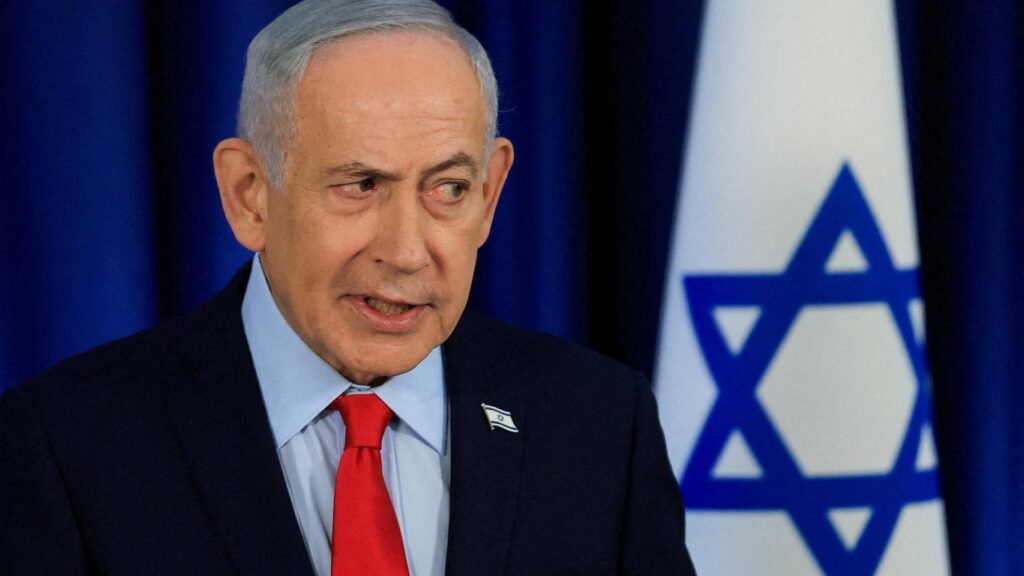
In public, the unity between Benjamin Netanyahu y Donald Trump It is unbreakable. The Israeli prime minister assured on Wednesday afternoon that he spoke with the US president before accepting the ceasefire with Iran proposed by Pakistan.
Privately, things seem to have turned out differently. Israeli sources they counted on Wall Street Journal that he had learned “at the last minute” of Washington’s intentions on Tuesday night, something that would have left them “displeased”.
The point that would have left them particularly “dissatisfied“, according to the euphemism used, would have been the announcement by the Pakistani Prime Minister, Shehbaz Sharifthat the ceasefire also applied to Lebanon.
Since March 2, Israel has been carrying out a military operation against the Shiite militia Hezbollah in the south of the country. Hence the confusion in the early morning when Netanyahu warned in a statement that he would continue fighting on Lebanese soil.
The day of attacks on Wednesday, April 8, has been the bloodiest to date, with more than 250 dead and more than 700 injured. So much so that it has led Tehran to backtrack on its commitment to reopen the Strait of Hormuz.
The fact that Hezbollah – Iran’s historical ally – has expressed itself in favor of the ceasefire has not stopped Netanyahu, who has insisted that he will continue to “attack them.” “We continue with the finger on the trigger“, he warned Iran.
The Israeli prime minister thus refers to issues such as the 450 kilos of enriched uranium that Iran still keeps in underground warehouses. If Trump has spoken of “cooperating” to unearth them and recover them, Netanyahu warns that he will have them “by agreement or by force“.
“We are prepared to fight again at any time,” he declared defiantly in his video conference. There are still “objectives to meet,” he says, when Iran “is weaker than ever” while Israel is “stronger than ever.”
Criticism of the Israeli opposition
Netanyahu’s contumacy must be understood from an internal perspective. For Israel, what has been achieved in these 40 days of war is not enough to guarantee elimination of its main threat in the Middle East.
“We proposed together with the US to eliminate a existential threat to the State of Israel and for the entire free world. And we are fulfilling this mission. We are carrying it out step by step, objective by objective,” he insisted.
The reality is that since the announcement of the ceasefire, the Israeli prime minister has been the target of criticism from both the left and the right. “There has never been a biggest political disaster in our entire history. “Israel was not even at the table when key decisions for our national security were made,” he denounces Yair Lapidleader ‘Yesh Din’ (There is a Future).
Lapid, leader of the opposition, considers that Netanyahu has “strategically failed” in the war and has not fulfilled “any of the goals that he himself had set.” Yair Golanof the social democratic coalition Los Democrats, directly accuses him of “lying.”
“He promised a ‘historic victory’ and security for generations, but in practice we obtained one of the most serious strategic failures Israel has ever known,” criticizes Golan. “Iran comes out stronger. It has enriched uranium, controls the Strait of Hormuz and dictates the conditions. And Israel, once again, as in Gaza: it is not in the room.”
The leader of ‘Yisrael Beitenu’ (United Israel), the ultranationalist Avigdor Liebermanstated that the ceasefire “gives the ayatollah regime a break and the opportunity to reorganize.” As he writes on the social network X, “we will have to return to another confrontation under harsher and we will pay a much higher price“.
Even a member of the extreme right that supports Netanyahu’s government, deputy Tzvika Foghel, has come to openly criticize the US president for agreeing to the ceasefire. “Donald, you are a duck“He wrote, only to delete the message shortly after.
You may also like
-
peace negotiators
-
more than 250 dead in one day while denouncing Israeli attacks on clinics and ambulances
-
Spain could be the most affected
-
Israel takes advantage of the ceasefire with Iran to launch its largest attack against Lebanon
-
A typo in the Pakistani prime minister’s post that led to the ceasefire between the US and Iran raises questions: was it dictated to him?