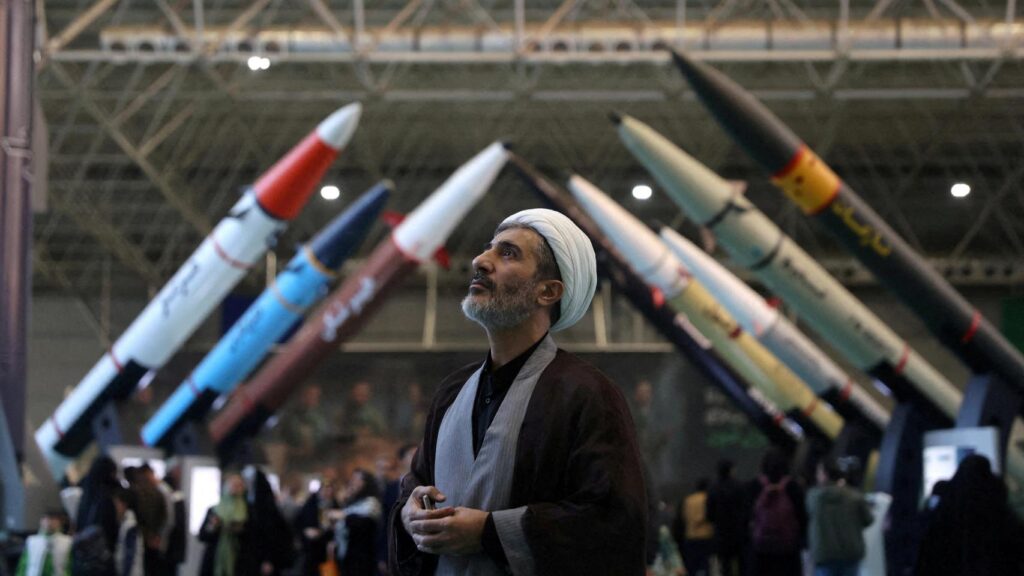
The Iranian Minister of Foreign Affairs, Abás Araqchiconfessed this Tuesday that he receives “direct” messages from Steve Witkoffthe New York real estate investor turned special envoy of Donald Trump to the Near East.
“Messages have been exchanged between Iran and the United States, both directly and through friends in the region,” acknowledged the head of Iranian diplomacy in an interview with the network. Al Jazeera.
It is the first confirmation by Iran that the parties are in regular contact to find a negotiated solution to the war, which Trump says is “approaching its end.”
On Tuesday morning, the head of the Pentagon, Pete Hegsethhad anticipated that the negotiations with Iran were “gaining strength” and that the coming days would be decisive.
Araqchi avoided elevating the contacts to the category of negotiations, and clarified that Tehran still has not responded to the White House’s 15-point peace plan.
“All messages are transmitted through the Ministry of Foreign Affairs or are received by it, and there are communications between security agencies,” emphasized the Iranian diplomat, who wanted to emphasize that the Islamic Republic has not presented “any proposal or conditions” to end the war either.
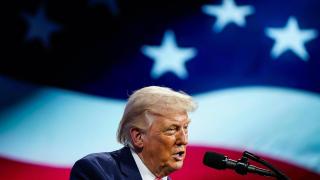
Araqchi was also not confident that the dialogue with Washington could come to a successful conclusion because “the level of trust is zero,” and he made it clear that Iran would not settle for a ceasefire, but only contemplates the definitive cessation of hostilities.
In the aforementioned interview with Al JazeeraHowever, the Iranian Foreign Minister ended up agreeing with Trump by saying that “the Strait of Hormuz can be a peaceful sea route for the peaceful use of ships from countries around the world.”
The tenant of the White House had declared a few hours before that the bottleneck would automatically reopen following the US military withdrawal.
Araqchi was not the only Iranian political leader to strike a conciliatory tone. The president Masud Pezeshkian He also reaffirmed that Iran has the “necessary will” to end the war, but only if a series of “essential conditions” are met and its own receive “solid guarantees” that the United States or Israel will not attack in the future.
The position of the reformist leader and his minister Araqchi clash, however, with the statement of the Revolutionary Guard, which threatened through a statement to attack the large United States technology and defense companies that operate in the Middle East, which it accused of participating in the offensive.
The list of potential retaliatees includes companies the size of Cisco, HP, Intel, Oracle, Microsoft, Apple, Google, Meta, IBM, Dell, Palantir, Nvidia, Tesla or Boeing.
“The United States Armed Forces are, and were, prepared to stop any attack from Iran, as demonstrated by the 90% drop in attacks with ballistic missiles and drones by that terrorist regime,” the White House tried to reassure.
Disjointed
The intelligence services of the United States and Western countries have indications that Iranian leaders who survive the war have problems communicating and cannot hold face-to-face meetings.
They fear that the United States or Israel will intercept their communications and make them the target of airstrikes, and that makes coordination between the different branches of the regime difficult and limits decision-making.
It is true that, according to The New York TimesBefore the war, Iran established a decentralized control system that allows local commanders in different regions of the country to make their own decisions about attacks, even without receiving direct orders from Tehran.
Furthermore, Trump seems to have ruled out the possibility of forcing a regime change, to the point of ensuring that this objective has already been met.
“They’re different people than anyone you’ve ever heard of before, and frankly, they’ve been more reasonable. So we’ve had a total regime change, beyond what anyone would have thought possible,” he told CBS last week.
“We may not be witnessing a regime change, but rather a change within the regime itself that could generate a strategic reality significantly worse than the one that existed before the war,” warns the analyst. Danny Citrinowicznon-resident fellow at the Atlantic Council.
The specialist considers likely the emergence of “a younger, more radical and more vindictive leadership, potentially dominated by hard-line elements within the Revolutionary Guard and lacking significant internal counterweights.”
You may also like
-
Iran claims that the US has unlocked Iranian funds held in Qatar, but the White House denies it
-
Barcelona, with one eye on the derby and another on the Champions League
-
how he decided to unleash his ‘Epic Fury’ against Iran
-
punishes critical journalism with vetoes in the Casa Rosada and Congress
-
Polisario renounces independence as the “only option” against Morocco and celebrates US mediation