
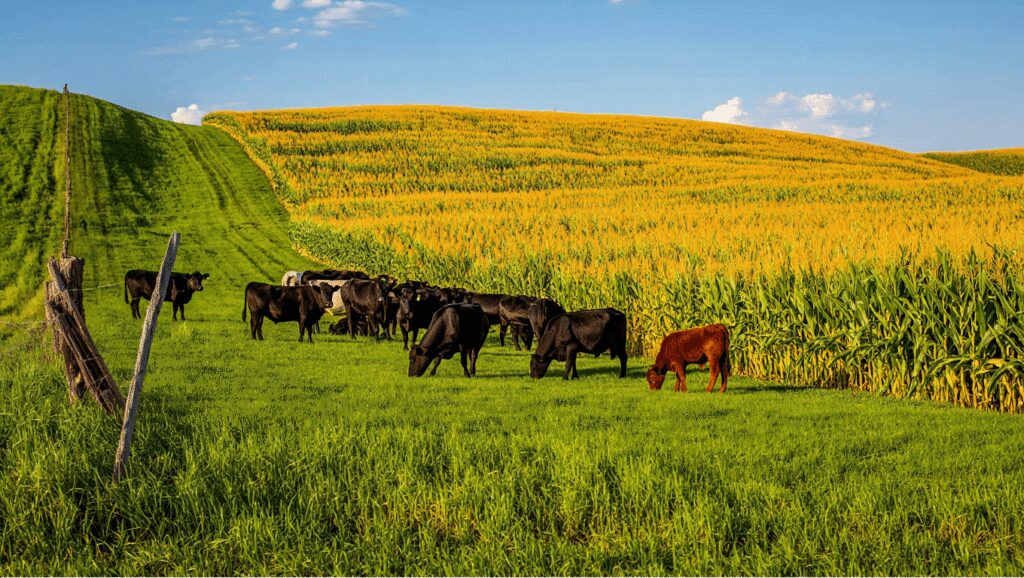
The Quapaw Nation managed to transform one of the most contaminated areas in the United States into productive lands: today they graze cattle and plant wheat and corn where before there was only toxic debris. This advance is relevant now because it offers a practical model of environmental recovery led by an indigenous community, with direct implications for local health, employment and food security.
Mining heritage and its impact
The area known as Tar Creek and the so-called “Picher Field” were exploited for decades to extract zinc and lead; A substantial part of the production of heavy metals used for ammunition in the wars of the 20th century is attributed to its rise. When the deposits were exhausted, the mines closed and the landscape was abandoned.
In practice, the closure left behind severe pollution: acidic drainage that turned the creek orange, metals like lead, arsenic and cadmium in the water and soil, tailings mounds and sinkholes that swallowed roads and homes. The area was classified as a site Superfundthe federal classification for areas with high environmental risk.
The Quapaw Nation’s Response
The Quapaw Nation has inhabited that region since before the massive arrival of mining. Between 1997 and 2013 he worked with the Environmental Protection Agency (EPA) to train their staff in soil cleanup and waste management. In 2013 the tribe independently took on the rehabilitation of a sensitive 40-acre parcel known as “Catholic 40.”
The initial effort combined heavy machinery and agricultural techniques: tailings removal, addition of topsoil, seeding and mulch to reestablish cover. According to the tribal team, in less than a year they removed more than 107,000 tons of waste from the parcel and billed the costs to the EPA.
- 1990s–2013: Training and agreements with the EPA.
- 2013: Beginning of the “Catholic 40” cleanup; >107,000 tons removed.
- Next decade: More than 7 million tons of waste removed and >600 acres remediated, according to the Quapaw Nation Environmental Office (QNEO).
- Techniques used: soil amendments, constructed wetlands and reforestation with native species; Experimental use of mushroom compost to immobilize metals.
- Current result: sufficient pastures for a rotational grazing system with 400 head of cattle, bison breeding and grain production.
The tribe invested in equipment and expanded its construction department; Its environmental scientists incorporated methods that reduce the need to excavate all contaminated material, by immobilizing metals in place and recovering the functionality of the ecosystem.
What this means for the community and other sites
Beyond the reclaimed landscape, the project has generated job opportunities, technical training and a local source of food and fiber. For nearby communities, reducing exposure to heavy metals implies a health benefit that may take years to measure, but is tangible in terms of usable water and land.
The experience of the Quapaw Nation can serve as a reference for other recoveries: it demonstrates that remediation can combine modern techniques with ecological practices and that local leadership—in this case indigenous—accelerates results and generates sustainable capabilities.
As those responsible for the project warn, the complete recovery of the area will still take time and is not expected to be immediate; However, the training of new professionals and the transfer of knowledge means that the next generation could see the area even more restored.
In summary, the transformation of Tar Creek offers an example of how remediation Community-led environmental management can turn industrial liabilities into productive assets, balancing ecological restoration and economic development—an approach that resonates with many other mining-affected regions.
Similar items

Alonso Delgado covers the international news with rigor. You’ll find accurate and relevant reporting on major global events, from political crises to diplomatic breakthroughs.
You may also like
-
The drama of Angela, the grandmother who spent 5 months in jail in the US because an AI confused her face with that of another person
-
“Our routine for 50 years has been war”
-
The downing of the F-15 and the new attacks in the Gulf prove that Trump still has not won the war after five weeks
-
US time is running out to rescue him
-
between economic rebirth through clean energy and ‘ghost towns’