In a message that has generated strong controversy, the president of the United States, Donald Trump, stated that “Iran is dead,” while redirecting his speech toward domestic politics by pointing out the Democratic Party as the country’s new “greatest enemy.”
The statement, published in Truth Social, occurs in parallel with a recent unprecedented military escalation, which has provoked mixed reactions. While some sectors interpret his words as a show of force, others consider them a provocation that could further aggravate the crisis.
AN OFFENSIVE WITH PROFOUND CONSEQUENCES
The conflict escalated on February 28 with a joint US-Israeli operation against Iran, whose stated goal was to neutralize strategic threats. The attacks led to the death of Iran’s supreme leader, Ali Khamenei, and key figures in the military and intelligence establishment.
Since then, official Iranian figures report more than 1,300 civilian deaths and thousands injured, in addition to extensive destruction of basic infrastructure. For Washington and its allies, the offensive responds to security needs; For Tehran, this is a direct aggression with serious humanitarian implications.
IRAN RESPONDS AND RAISES THE BET
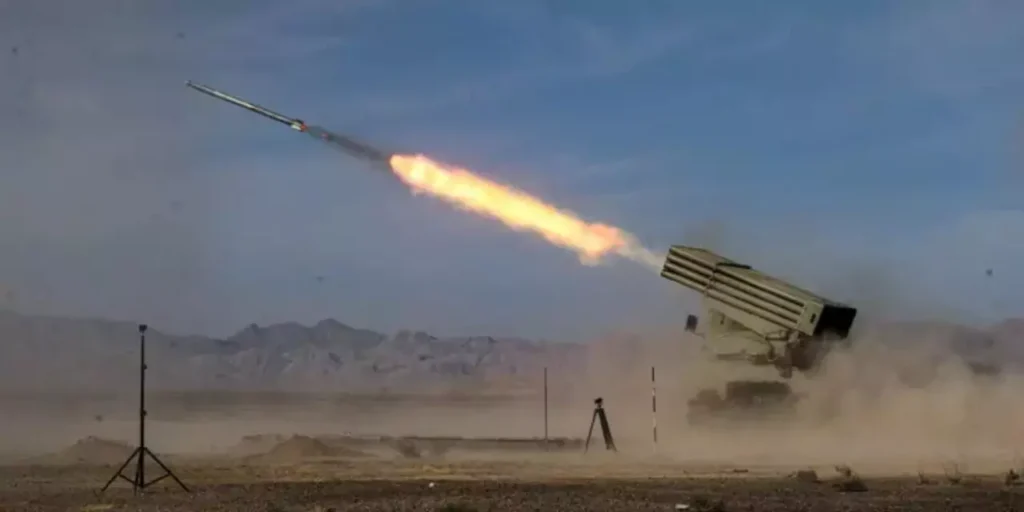
Far from weakening, Iran has responded with sustained missile and drone attacks against Israel and US positions in the region. In addition, it has directed offensives against energy facilities linked to United States interests.
The most critical point has been the almost total blockage of the Strait of Hormuz, a key artery of global energy trade. This action has immediately impacted international markets, skyrocketing oil prices and generating global concern.
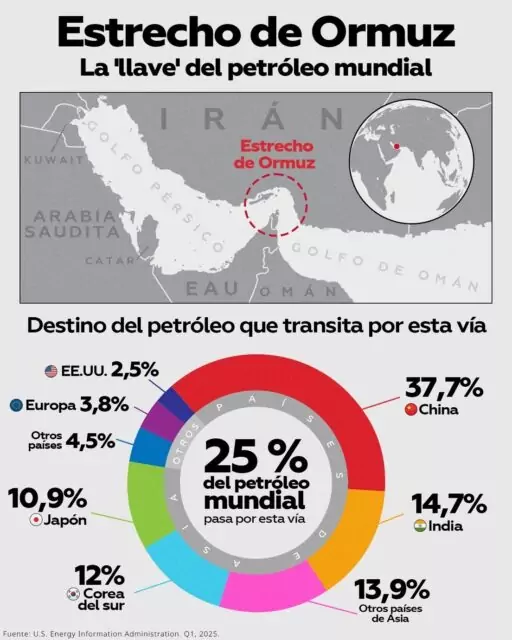
Tehran maintains that control of the strait is a defensive and strategic measure, while Washington describes it as a direct threat to international trade.
CROSSING THREATS AND RISK SCENARIO
Tension has escalated with explicit warnings from both sides. Trump demanded the complete reopening of the strait within 48 hours, under threat of attacking Iranian energy infrastructure.
In response, the Islamic Revolutionary Guard Corps has warned that any additional military action will provoke a massive reaction, which would include a complete closure of the sea passage and attacks on US and allied interests throughout the region.
The exchange of threats has raised alarms about a possible expansion of the conflict into a large-scale regional confrontation.
ISOLATION AND INTERNATIONAL DIVISION
Washington’s proposal to create a naval coalition to escort ships in the strait has not gained widespread support. Several powers, including China, Germany and Japan, have chosen not to get involved militarily, reflecting a fragmented international scene.
This distancing shows the complexity of the conflict: while some governments support pressure on Iran, others warn of the risks of an uncontrolled escalation.
BETWEEN POLITICAL DISCOURSE AND GEOPOLITICAL REALITY
Trump’s statements, both about Iran and his domestic political adversaries, add a component of polarization to an already volatile crisis. For its critics, the language used trivializes a conflict of high human cost; For its followers, it reinforces a stance of firmness in the face of external threats.
Meanwhile, Iran maintains a narrative of resistance and warns that it is prepared for a prolonged conflict, making it clear that the situation is far from being resolved.
You may also like
-
VIDEOS | Air tragedy in Colombia: Military plane falls and leaves dead and dozens injured
-
Global digital fraud: Mafias in Asia raise alerts while Mexico faces crisis with 93% impunity
-
“Heat” Wall: The new matte black US barrier in front of Ciudad Juárez that seeks to stop escalation
-
Death of “El Mencho” shakes the CJNG and opens a new era of power
-
Historical reconciliation? Sheinbaum invites King Felipe VI to the 2026 World Cup after an unprecedented statement about the Conquest