
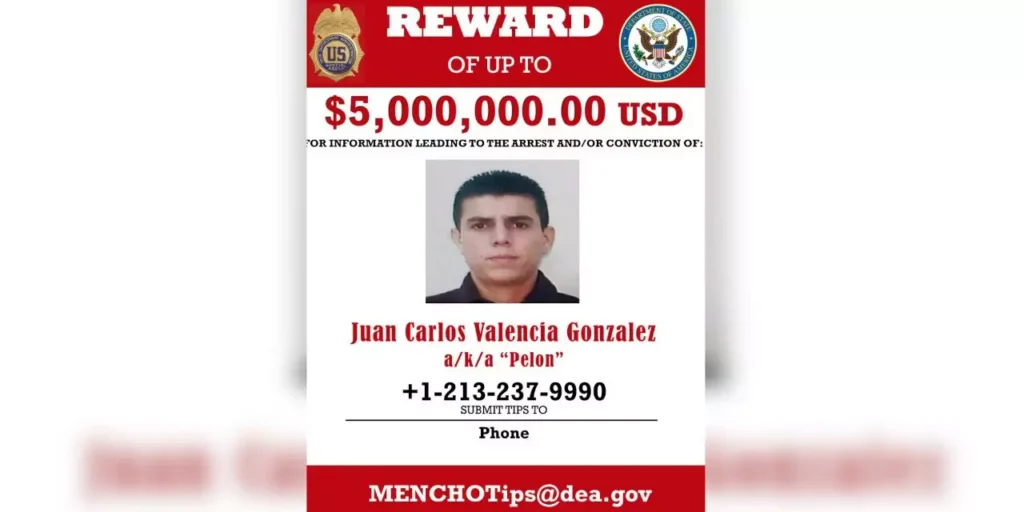
The death of Nemesio Oseguera Cervantes marks a breaking point for the Jalisco Nueva Generación Cartel, one of the most powerful criminal organizations in Mexico. His dejection not only closes a cycle of leadership, but also opens a stage of uncertainty marked by the internal reconfiguration of the group.
The capo was killed on February 22, 2026 in an operation in Tapalpa, Jalisco, after being located using aerial surveillance technology. Several of his bodyguards also died in the confrontation, putting an end to one of the longest and most violent leaderships in contemporary drug trafficking.
A SUCCESSION MARKED BY THE FAMILY
After his death, the dispute over control of the cartel did not continue publicly. According to international reports, Juan Carlos Valencia González, the capo’s stepson, quickly assumed command.
His rise is not minor: he is an operator with a track record within the group, linked to key armed structures. Furthermore, his relationship with the Oseguera family gives him internal legitimacy in an organization where family ties have been decisive in maintaining cohesion.
However, his leadership occurs at a critical time, with several relevant commanders also listed as possible successors, raising the risk of fractures or internal disputes.
LEGAL OBSTACLES AND INTERNATIONAL PRESSURE
The new leader faces a complex scenario not only within the cartel, but also outside of it. His American citizenship introduces an unusual component to the fight against organized crime.
US security agencies face legal restrictions on investigating their own citizens abroad, which could slow direct actions against them. At the same time, Mexico maintains clear limits on foreign intervention in its territory.
This crossing of jurisdictions complicates binational coordination at a time when the CJNG continues to be one of the main security threats.
A CRIMINAL EMPIRE AT RISK OF FRAGMENTATION
The CJNG operates through a network of cells with relative autonomy, which historically has allowed it to expand rapidly. However, this same model could backfire if central leadership loses control.
Analysts warn that the consolidation of Valencia González will be key to avoiding an internal war between factions. If this is not achieved, the organization could fragment, generating even more intense episodes of violence in different regions of the country.
BETWEEN CONTINUITY AND CHANGE
Although the replacement points to operational continuity, the current context is different. Pressure from Mexican and US authorities, added to changes in the dynamics of drug trafficking, will force the new leadership to redefine strategies.
Beyond names and hierarchies, the core of the problem remains: a criminal structure with financial, armed and territorial capacity that continues to represent a major challenge for both countries.
You may also like
-
Historical reconciliation? Sheinbaum invites King Felipe VI to the 2026 World Cup after an unprecedented statement about the Conquest
-
Israel announces elimination of senior Iranian official: Ali Larijani killed in military attack
-
Blockade of the Strait of Hormuz puts pressure on the US: Trump could get caught up in the conflict with Iran
-
Tension escalates: US rejects negotiations as Iran intensifies attacks in the Middle East
-
Díaz-Canel thanks AMLO for his support for Cuba after a message on networks