
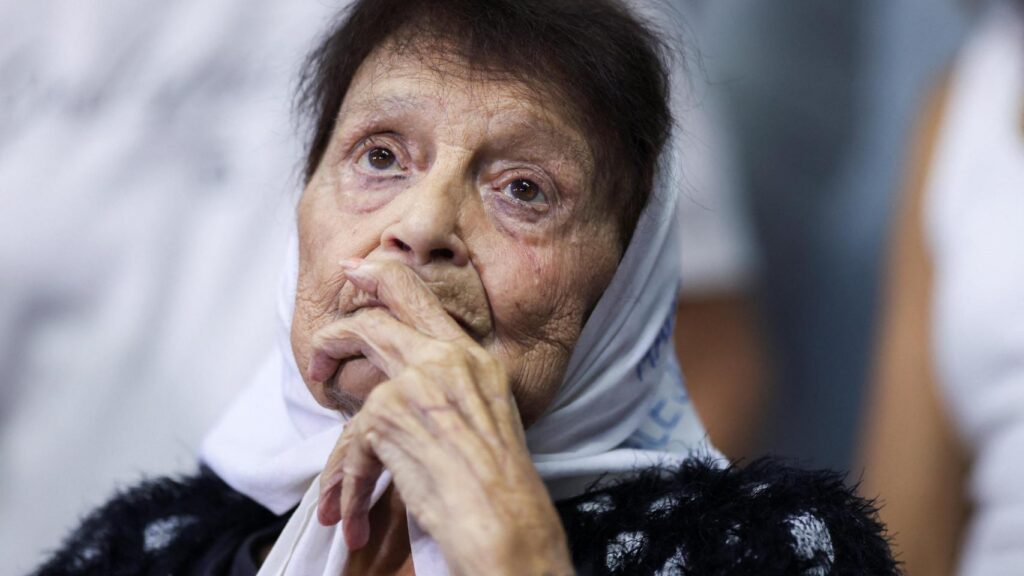
June 17, 1975 was a Tuesday. Alejandro had left his house in the morning to go study one of the first year Medicine exams that he had days later. He called to let them know he was going to eat. “Wait for me, I’m coming”he said hurriedly to his mother from a public telephone. A few minutes later, near his home, a vehicle stopped next to him. He was 20 years old when he was kidnapped.when he disappeared.
Half a century has passed, but his face is still young. Alejandro’s image hangs on a large pin that his mother, a woman who at 95 years old he asks not to die without being able to see her son’s remains: “I don’t lose hope, but my God, I don’t want to leave without at least being able to touch his bones. Tell them where he is,” says Taty Almeida.
She is one of the last living faces of the struggle of the Mothers of Plaza de Mayo, a group of mothers and grandmothers who with their white handkerchiefswhich symbolized the diaper cloth of their missing children, were the main peaceful resistance to the Argentine dictatorship and those who managed to let the world know what was happening in the country.
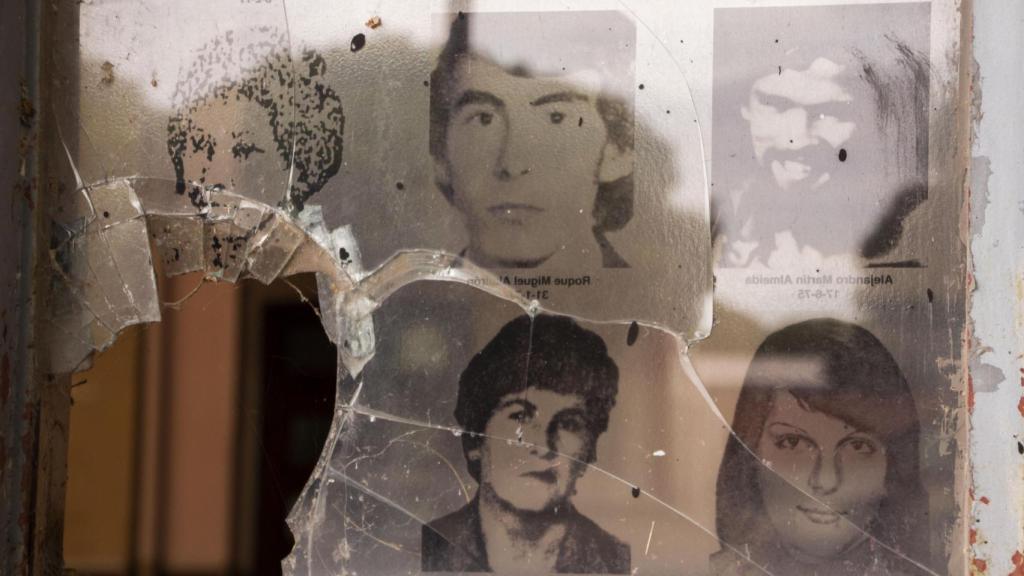
Image of the missing on the walls of the ESMA, the former detention center during the dictatorship
For seven years, the Military Juntas commanded by the Argentine Armed Forces created a system of repression and extermination against guerrillas, leftist militants and even citizens without political affiliation. A dictatorship that would begin in 1976, but that a year before had already begun to take shape, creating a network of disappearances, theft of babies, kidnappings of citizens and torture of thousands of Argentines in more than 700 clandestine centers throughout the country.
When democracy arrived, those same centers passed into the hands of organizations such as Mothers of Plaza de MayoGrandmothers of Plaza de Mayo or HIJOS, the relatives of the disappeared who fifty years later continue searching for truth, memory and justice.
The justice behind some remains
María Teresa Trotta and Roberto Castelli were kidnapped in February 1977. The day they were taken from home, their daughter, Verónica Castelli, who was just over two years old, was present. They were taken to a police station known ironically as The Sheraton, for being the place where they housed intellectualsand then they were taken to the clandestine center El Vesubio.
“My mother was kidnapped 6 months pregnant and when she finally came out she was taken to the Campo de Mayo Military Hospital, where she underwent a cesarean section and was separated from her baby,” says Castelli, who acknowledges that she was able to learn the entire story of her parents as an adult.
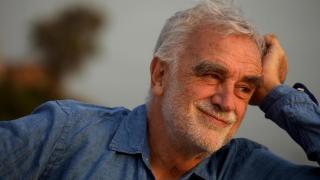
After the kidnapping, his paternal uncle, a commissioner of the Federal Police, assumed his guardianship. “For years they told me that my parents were traveling and that they would return on my 15th birthday. It was forbidden for people to talk to me about them or their political activism and my grandmothers did it secretly. When I was old enough I left and they declared me pperson non grata in my family“, he says while finishing preparing a poster with the image of his parents that he will use during the demonstration on March 24 for the anniversary of the coup d’état.
For Castelli, as for thousands of families still, the possibility of finding the remains of his parents “is uncertain.” The plan perpetrated by the dictatorship was precisely that the bodies would not be found, and that is why different forms of murder were practiced in each detention center: from burial in mass graves and the burning of bodies, to the well-known ‘death flights’, in which the bodies of the detainees, sometimes still alive, were thrown from airplanes over the Río de La Plata.
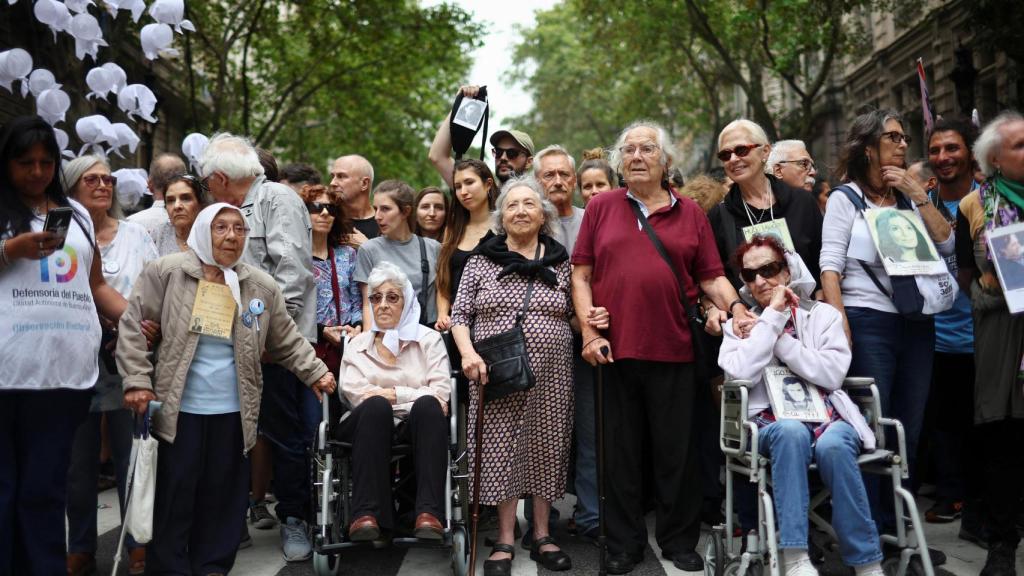
Demonstration in commemoration of the 49th anniversary of the military coup of 1976, in the Plaza de Mayo in Buenos Aires.
The survivors of those centers are fundamental to the judicial processes that in 20 years have been able to convict more than 1,200 people for crimes against humanity. Castelli acknowledges that it is not clear how his parents’ lives were ended, but that they have long urged the judge to analyze the entire terrain of Vesuvius.
A process that, as he explains, has been slowed down, among other things, due to the lack of financing and the layoffs in human rights organizations carried out by the Government of Javier Milei. This is why the work of family organizations and others, such as the Argentine Forensic Anthropology Team, is essential to continue investigating and putting pressure on Justice and the State itself so that it does not abandon the cases.
Fifty years later the bodies continue to appear. A few weeks ago, some remains were found in the clandestine center of La Perla, in the province of Córdoba. Twelve of them have been identified and handed over to their families. A justice process necessary not only to be able to explain what happened in that historical period, but also for the families themselves.
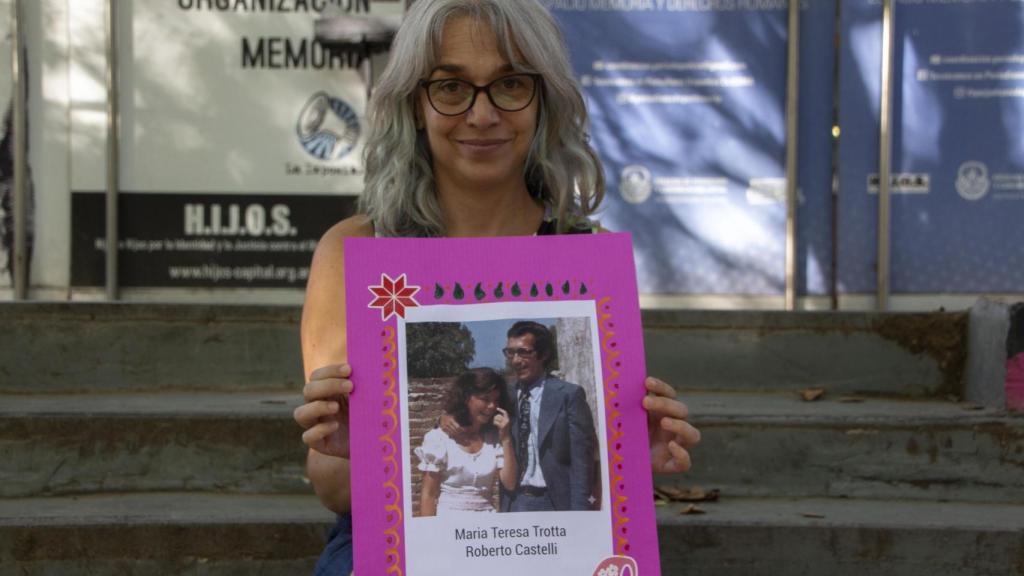
Verónica Castelli is looking for her parents, 50 years later.
For Paula Eugenia Donnadio, a member of the HIJOS organization along with Castelli, families perform a complex mental operation to assume that, without knowing how, when or where, their relatives were murdered. Although his mother was kidnapped and later released, his uncles did not suffer the same fate and have remained missing since 1976.
“I remember that when the first testimonies of the repressor Adolfo Scilingo came out and what was done in the ESMA, the largest detention and torture center of the dictatorship, my grandmother bought a bouquet of flowers, took a taxi, went to the Río de La Plata waterfront and He threw the flowers into the water. It was the only way I had to say goodbye to them,” he says from a small room in ESMA itself, a space that his uncles passed through and that has now been transferred to organizations like his.
The search for the living
They call Miguel Santucho ‘Tano’ because of the years he lived in Italy. Although he already has an inevitable connection with that country, the truth is that it was not a trip he took for pleasure. When his mother, a member of the Revolutionary Workers Party, was kidnappedhis father was abroad and they told him not to return.
Tano and his brother met him again in exile, where they remained until he returned in 1985, at the age of ten and with the dictatorship being tried in court. It was already in Argentina when she discovered that her grandmother was in the Grandmothers of Plaza de Mayo organization, something that could only mean one thing: she was looking for a missing grandson. That is to say, that I had a brother I didn’t know.
Her mother had been kidnapped while pregnant, as her grandmother discovered from some notes she saw in her daughter’s house shortly after the disappearance. Something that they were able to corroborate years later when some companions who survived recognized that, despite the torture and treatment to which she had been subjected, she had maintained that pregnancy. They could never be sure that the baby had been born, but her grandmother never stopped looking for him. He did it until the day he died.
Still during the dictatorship, grandmothers went abroad with remains of hair from stolen babies
The process of finding appropriate grandchildren is complicated. Sometimes what there is is information from the appropriators’ environment with which to go to court, open a case and try to investigate the origin of those boys. Still during the dictatorship, grandmothers went abroad to tell their stories with photos and some remains of hair or fingerprints of babies that had been stolen.
But the case of those who were born in clandestine centers, as was the case with Tano’s brother, was different. There was nothing. All that was left was to hope that at some point in his life his brother would have doubts about your past and that he approached Abuelas de Plaza de Mayo, the case was investigated and the national DNA bank did the rest.
This is what happened in July 2023. Tano was spending a few days in Italy when he received a call from his colleagues from the Abuelas de Plaza de Mayo association, where he had started working after his grandmother died. “I thought he was calling me about something about work, but at one point in the conversation they asked me to switch to a video call. It never occurred to me that they were calling me about something personal, until they asked me if I was sitting. That’s when I realized, because they had told other grandchildren the same thing before telling them the news,” he says.
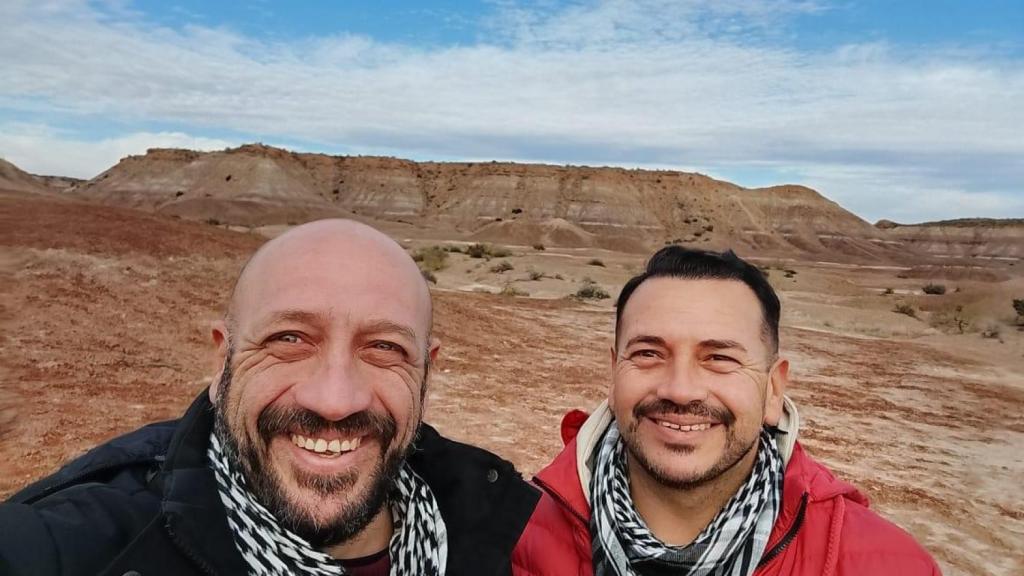
Miguel Santucho (left) with his brother Daniel Santucho (right).
“I started to tell them that if it was a joke it wasn’t funny. I was jumping around with my phone in my hand, I got very nervous. Then he confirmed it to me and told me that my brother was there with them and that he wanted to meet me. I almost had a heart attackI was speechless. They turned the phone over and I saw it on the screen. I had spent my entire life imagining that moment and every time a grandchild appeared I was worried to understand what they felt in case it happened to me. And that day came to me,” he says, still excited.
It took decades for the Santucho brothers to rebuild their family, but thanks to the work of organizations like Abuelas, they have been able to do so. In total 140 grandchildren have been recovered in these years of struggle. A personal search that ends when a stolen grandson appears, remains are found or a repressor is sentencedbut at a collective level they also have to fight against a Government that does not always support them.
Added to the defunding is criticism about the past of their relatives, who are accused of being terrorists or of having waged an armed war that led to the coup d’état. A rhetoric that the leaders of the dictatorship defended and that an important part defends today of the current Argentine Government. In this sense, several deputies from La Libertad Avanza, Javier Milei’s party, visited the Ezeiza prison in 2024 and met with soldiers convicted of crimes against humanity.
“What did my sister do to be tortured in her mother’s womb?”
“What would a person have to do for the State to kidnap, torture, murder and for the remains not to have been returned to the family? What is my sister supposed to have done to be tortured in her mother’s womb? What are they trying to justify? I am shocked by the return of cruelty, which was something that was overcome years ago,” says Castelli when asked about the criticism she receives for her parents’ militancy.
Taty Almeida also insists on this, who knows that when the last Mother of Plaza de Mayo leaves we will have to continue remembering. “They should stop denying or justifying what happened. So many years later and we continue to find evidence. Together we are showing that the fight doesn’t endbecause the only fight that is lost is the one that is abandoned. “They haven’t defeated us!” he concludes.
You may also like
-
Donald Trump dismantles a program that helps impoverished immigrants get affordable legal representation
-
Iran war today, live
-
Accusation that Orbán leaks information to Putin complicates EU effort to support Ukraine
-
Trump gives himself five days to reinforce his offensive and try to revolt the “civilian” wing of the Iranian regime
-
The European Union steps on the accelerator against Trump and China with a free trade agreement with Australia