

November 9, 2017. Chile was preparing for the first round of the presidential elections and José Antonio Kast (1966) faced what would be the first of three attempts to reach La Moneda and take the reins of the Government.
A year and a half earlier he had resigned from the traditional center-right party, the Independent Democratic Union (UDI), and while he toured radio and television channels he did not hide his vision of the country’s recent political history.
“I think so, that [Augusto Pinochet] would vote for meif he were alive,” he said then, calm and sure of his answer. Following the dialogue with the journalist who interviewed him, he went even further, establishing a contrast between the dictatorship and the last government of Sebastián Piñera, who governed the South American country twice and died in 2024 after a helicopter accident in Lake Ranco.
“I am very direct, I think that Pinochet made a qualitative leap so that someone like Sebastián Piñera could develop a program. Separating the issue from human rights, “Pinochet’s government was better for the development of the country than Piñera’s.”he adds.
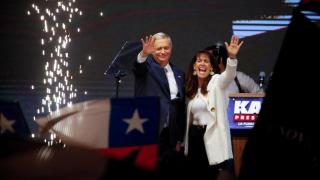
Today, years later, that leader who presented himself as a outsider of the traditional right is about to assume the presidency of Chile and become the first far-right president in the country’s history, after defeating the communist candidate Janette Jara at the polls in December.
As time went by, his criticism from the right of the sector to which he once belonged continued and, at times, intensified. After the social outbreak of 2019 and the constitutional process that opened in the following years, Kast came to harshly question the center-right governments and the political direction of the country.
However, the night of his electoral victory also marked a change in tone. Minutes after the Electoral Service confirmed his victory at the polls with more than 58% of the votes, Kast opted for a more institutional speech, with nods towards political sectors broader gestures and gestures of recognition towards figures from previous governments.
This shift was not limited to his words about the legacy of Sebastián Piñera, but was also reflected in the way he addressed value issues that for years marked his political discourse, such as divorce, abortion or same-sex marriageissues that in the campaign were subordinated to its main programmatic axis: public order and security.
Under the slogan of promoting an “emergency government” in the face of economic stagnation and the advance of delinquency and organized crime—as he has repeatedly stated—José Antonio Kast, founder and leader of the Republican Party, is preparing this Wednesday to assume the presidency of the country.
He does so in his third presidential attempt, like former president Salvador Allende, who was elected in 1970 and whose figure represents one of the ideological poles opposites in Chilean political history.
Links with Nazism and the military regime
Catholic and the youngest of 10 children, the elected president of Chile is the son of Olga Rist and Michael Kast Schindle, who was member of the National Socialist German Workers Party. His father, who arrived in Chile in 1950, at the age of 26 after his country’s defeat in World War I, fought in France, Italy and in the Crimean peninsula during the war.
Although he started out as a soldier, his military rank reached lieutenant and despite his capture by US forces, he managed to escape in April 1945, after jumping from the second floor of the school where he was detained. Although his first destination, after leaving his nation, was Argentina, Chile ended up being the definitive option when it came to settling and start a family.
The truth is that the political roots of the new president are not limited only to his father, since the eldest of his brothers, Miguel Kastalso made a tour on the public stage. First, collaborating with the Christian Democratic Party (PDC), the same one that hosted presidencies such as those of Eduardo Frei Ruiz-Tagle or Patricio Aylwin. Later, from the Gremial Movement (MG) and the UDI, same groups that José Antonio himself would later join.
Elected president of the School of Economics and later general secretary of the Federation of Students of the Catholic University (FEUC), the eldest Kast decided to continue adding steps in the exercise of power.
It was after the coup d’état of September 1973 that a call from one of his closest associates during his university studies dissuaded his aspirations to go to work in Mexico and he arrived in Mexico. Ministry of Planning (Mideplan) of the regime. It was also part of the so-called Chicago Boysa school that the economist Milton Friedman helped form in the United States, and led the Central Bank.
It was from those decisions that the fate of the Kast family and especially that of José Antonio, was seen. united with the work of Pinochet and his entourage. Not only because of family ties, but also because of the different positions that the elected president has had in defense of the armed intervention and the 17 years of government that followed afterwards. Along with voting “Yes” in the 1989 plebiscite, he has questioned the prosecution that certain soldiers, denounced for human rights violations, have had by the justice system. One of them, Miguel Krasnoff, today imprisoned in Punta Peuco.
right-wing rebel
As happened with the firstborn of the Kast-Rist family, José Antonio was trained in the Catholic University (UC)as a lawyer, and also actively cooperated with the Trade Union Movement, sealing a relationship of trust with who is recognized as the “intellectual father” of the Pinochet dictatorship.
The founder of the UDI, drafter of the current Political Constitution and murdered in 1990 by left-wing terrorists of the Manuel Rodríguez Patriotic Front (FPMG), while leaving to teach law in a university classroom, Jaime Guzmán.
It was while he was at that university that Kast held various student positions, such as secretary of the Student Federation and representative to the Superior Council. He was also defeated in his attempt to preside over the highest student body.
The UDI, which Guzmán founded and which sponsored the failed candidacy of Evelyn Matthei in the last presidential elections, served as Kast’s political domicile until May 2016, when, preceded by two attempts to preside over the store and change the course of the community – which until then was headed by the so-called Colonels–, he decided to abandon militancy and start a new project.
One that, first, translated into the Republican Action Movement and, second, in the Republican Partywhich brought him to the Executive Branch in March 2026 and which enjoys a significant bench of parliamentarians.
Always frontal towards the left and often without mercy with the center-right that he joined years ago, what is coming for the new president is, along with meeting the expectations that his next government raises in the citizens, convene groups that go beyond his political house in order to provide the governability that the country demands. The challenge seems immense and it will be the first months, it is noted, that will help mark your destiny.
You may also like
-
Iran attacks three cargo ships and the US destroys 16 ships laying mines in the Strait of Hormuz
-
Von der Leyen maintains her support for regime change in Iran but now vindicates the world order after criticism
-
Iran says Mojtaba Khamenei ‘safe and sound’ after being wounded in attack on first day of war
-
Gabriel Boric says goodbye to La Moneda “with his head held high” and “his hands clean” and takes over from the far-right Kast in Chile
-
assumes the presidency amid promises of a strong hand and a divided Congress